Saturday, January 12, 2013

Malaysian Herbs -Calotropis Gigantea-- (51)எருக்கஞ்செடி

google.com, pub-7876390333399498, DIRECT, f08c47fec0942fa0
http://www.sidhhaherbs.blogspot.com  எருக்கம் செடி

Calotropis gigantea (Crown flower) is a species of Calotropis

native to Indonesia, Malaysia, Philippines, Thailand, Sri 

Lanka, India, and China 
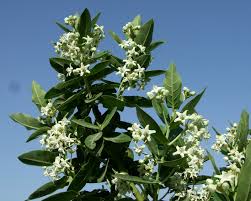

Calotropis gigantea.
Common names: Giant Milkweed, Crown Flower, Swallow Wort.
Plant: 2.4-3m.Common Hindi names: Aak, Alarkh, Madar, Sveta Arka.
Flower: 5.1cm across.
One of the two common species of Calotropis, native to India. The other being Calotropis procera (Rakta Arka).
Calotropis grows wild up to 900 meters throughout the country on a variety of soils in different climates, sometimes where nothing else grows.
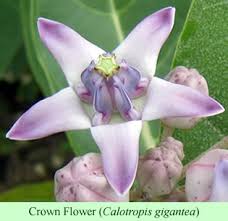
Calotropis is used as a traditional medicinal plant with unique properties.
 Traditionally Calotropis is used alone or with other medicinals to treat common diseases such as fevers, rheumatism, indigestion, cough, cold, eczema, asthma, elephantiasis, nausea, vomiting,and diarrhea. According to Ayurveda, dried whole plant is a good tonic, expectorant, depurative, and anthelmintic. The dried root bark is a substitute for ipecacuanha.
The root bark is febrifuge, anthelmintic, depurative, expectorant, and laxative.
The powdered root used in asthma, bronchitis, and dyspepsia.
 The leaves are useful in the treatment of paralysis, arthralgia, swellings, and intermittent fevers. The flowers are bitter, digestive, astringent, stomachic, anthelmintic, and tonic. Calotropis is also a reputed Homoeopathic drug.

  A fermented mixture of Calotropis and salt is used to remove the hair from goat skins for the production of "nari leather" and of sheep skins to make leather which is much used for inexpensive book-binding.

 Fungicidal and insecticidal properties of Calotropis have been reported

                               எருக்கஞ்செடி

நீல எருக்கு,ராம எருக்கு என ஒன்பது வகையான எருக்குகள் இருக்கின்றன என சித்தவைத்தியர்கள் கூறுகின்றனர்.எருக்கஞ்செடி 12 ஆண்டுகள் மழையில்லாமல் இருந்தாலும் கூட,சூரிய ஒளியிலுள்ள தண்ணீரை கிரகித்து வளரும் தன்மை கொண்டது.அதன் பருவகாலத்தில் பூத்து,காய்த்து,வளர்ந்துவிடும்.இதில் விஷேச அம்சம் கொண்டதுதான் வெள்ளெருக்கு.இதை வீட்டிலும் வளர்க்கலாம்.இதன் பூவை வைத்து விநாயகருக்கும்,சிவனுக்கும் அர்ச்சனை செய்யலாம்.வெள்ளெருக்கம் பூ சங்கை பஸ்மமாக்கப் பயன்படுகிறது.வெள்ளெருக்கு பட்டையை நூலுக்குப் பதில் விளக்குத்திரியாக போட்டு வீட்டில் எரிக்க சகல பூதங்களும் விலகி ஓடும்.வெள்ளெருக்கு வடவேரில் மணிமாலை செய்யலாம்.விநாயகர் செய்து வழிபடலாம்.ஆகர்ஷணம் எட்டு வகைப்படும்.இதில் தன ஆகர்ஷணம் பண வரவை அள்ளிக் கொடுக்கக் கூடியது இந்த வெள்ளெருக்கு விநாயகர்..



BUSH TEMPALANG

Calotropis yields a durable fiber (commercially known as Bowstring of India) useful for ropes, carpets, fishing nets, and sewing thread. Floss, obtained from seeds, is used for stuffing purposes.


A poultice of the leaves is applied for rheumatism, filariasis, wounds, glandular swellings,   eczema, pigmentation, and other skin inflammations. The latex acts as a purgative, used in treating ascites of Kapha type and hepatosplenomegaly ascites. 
physicianpackiam
(51)

Malaysian Herbs-Mentha diemenica-(50) MINT FAMILY

google.com, pub-7876390333399498, DIRECT, f08c47fec0942fa0
http://www.sidhhaherbs.blogspot.com


TASMANIA'S  HERB

When   you note clearly You can see this herb through out  Malaysia 

Mentha dementia

photoAbout twenty-five species of Mentha are distributed worldwide, six being endemic to Australia. All have aromatic foliage, a characteristic of the Lamiaceae family, to which they belong
distribution mapMentha diemenica occurs in grassland and forest habitats from the Mt Lofty Ranges in South Australia, throughout Victoria and Tasmania, and north to the Blue Mountains of New South Wales. It is a strongly suckering plant that in cold, dry conditions may become dormant, but when growing vigorously, it forms a dense ground cover 10-15 cm high.
The dull green, opposite leaves are ovate to lanceolate and 4-12 cm long. They are usually entire, but occasionally obscure teeth are noticed on the leaf margins. Leaves may be sessile or have a short petiole.
Flowers are borne in the upper leaf axils from late spring to summer. Each axil bears one to four flowers at each node, giving two to eight flowers. They are usually mauve or lilac with four small petals each extending 2-3 mm beyond the tubular calyx.
In cultivation, M. diemenica grows well in a slightly damp site in either reasonably heavy shade or full sun. In good conditions in a rockery it may become invasive and thus should be contained in a rock pocket or regularly controlled by removing suckers. It is a desirable plant between drive strips or near stepping stones where its fragrant aroma is noticed when it is trodden on.
Propagation is easy from cuttings taken at any time when the plant is growing vigorously, or by division when rooted pieces may be removed and re-established in a new situation. These new plants must be kept moist after transplanting.
Mentha diemenica is frost hardy, but it is susceptible to a rust fungus causing small brown spots on the underside of the leaves. This may be controlled with a suitable fungicide.
The leaves of this native mint may be used as a flavoring and garnish for cool summer drinks in a similar manner to the common introduced mint.
Text by John Wrigley, ANBG (1981)


Mentha diemenica

Mięta tasmańska

Design & Plant Use for Mentha dementia:
  • Summer flowering herbaceous plant suitable for border planting
  • Ideal for planting within the herb garden
  • Herbaceous plant with culinary usage
Mięta tasmańska
Mięta tasmańska
rodzina: Lamiaceae – jasnotowate
pochodzenie: Australia (południowa część), Tasmania
stanowisko: słoneczne, półcieniste, cieniste; mokre, płytka woda
wysokość: 10-15 cm
Odmiana o drobniutkich, żywozielonych liściach z wigorem płoży się i szybko okrywa wolne, wilgotne miejsca  - pomocna przy okrywaniu nieatrakcyjnych brzegów, zacieraniu granicy między brzegiem i wodą. Roztarte w palcach lub nadepnięte liście wydzielają cytrusowy zapach – można wysadzać przy schodkach, ścieżkach. Aromatyczny dodatek do napojów w upalne lato; można ją także suszyć.


Mentha diemenica is known by the common name of slender mint. The species is named after Van Diemen's Land, which is now Tasmania.[1]It is a mint species within the genus Mentha.


Wildly Grown In Austalia. Thanks to the Government of Australia
  physicianpackiam                                                                                                                                       (50)
http://www.sidhhaherbs.blogspot.com


Wednesday, January 9, 2013

Malaysian Herbs(49)-Ricinus Communis-ஆமணாக்குச்செடி

google.com, pub-7876390333399498, DIRECT, f08c47fec0942fa0
http://www.sidhhaherbs.blogspot.com

Ricinus communis-ஆமணாக்குச்செடி


The castor oil plant, Ricinus communis, is a species of flowering plant in the spurge family, Euphorbiaceae. It belongs to a monotypic genus, Ricinus, and subtribe, Ricininae. The evolution of castor and its relation to other species are currently being studied using modern genetic tools.
Its seed is the castor bean which, despite its name, is not a true bean. Castor is indigenous to the southeastern Mediterranean Basin, Eastern Africa, and India, but is widespread throughout tropical regions (and widely grown  in Malaysia and elsewhere as an ornamental plant).

Castor seed is the source of castor oil, which has a wide variety of uses. The seeds contain between 40% and 60% oil that is rich in triglycerides, mainly ricinolein. The seed contains ricin, a toxin, which is also present in lower concentrations throughout the plant.

An unrelated plant species, Fatsia japonica, is similar in 

appearance and known as the false castor oil

The leaves have Anti-vatha properties.The leaves can either be given as decoction or surasam.
The leaves are made into small pieces,then fried in castoroil and used for formentation in case of arthritis over the swollen and painful areas.
The leaves are heated and applied over the breast as a bandage to induce milk secretion in case of lactating mothers.
For painful abdomen due to constipation , amenorrhoea etc ,castor oil is gently applied externally over lower abdomen.Also the heated leaves of this plant should be externally applied over this area.
The roots are crushed and prepared as decoction and given for 3-5 days in case of pricking pain over axilla and increased vatha condition , lumbago,diseases of abdomen,pain around urinary bladder,
The oil prepared from seeds is castor oil.This oil is used to induce purgation in case of constipation,intesinal worms in children,eczema and dermatosis.
The dried seed powder is given in dose of about 1 to 2 gm in rheumatism, lumbago, piles, constipation, diseases of liver, spleen and sciatica etc.
For increased iyam or kapha conditions,cough,bronchial asthma etc, 2 parts of castor oil and 1 part of honey is mixed well and given internally to induce purgation and produce relief.

Though The Us National National University has time to search about this medicinal plant. The Indian Siddha Medicine Has gone far away in using as Traditional Medicine

The ancient and modern medicinal uses of the castor bean plant, Ricinus communis L. (Euphorbiaceae), in about fifty countries worldwide, has been surveyed. The different medicinal uses are grouped separately in relation to their pharmacological action, whether real or presumed, within the various medical specialties. The results show an extensive use of this plant throughout the world and the authors suggest that further research should be carried out to determine the active principles present in the various parts of the plant.

The plant grows throughout the tropical areas of India. In tropical regions the tree reaches the height upto 10-12 metres, whereas, in temperate regions a slender, woody, branching bush reaches upto 1-2 metres in height. The leaves alternate, palmately lobed with seven serrate lobes. The flowers monoecious, male flowers shortly stalked and female ones, sessile. The fruits are blunt, greenish, tricoccus capsules. The seeds are ovoid, flattened, shining and pinkish-grey in colour.

The plant is classified into two types viz. white and red. The white variety is commonly used in medicine. The botanical name of  Castor Oil Plant  is Ricinus communis and it belongs to family Euphorbiaceae. The seeds contain 45% of fixed oil, which consists glycerides of ricinoleic, isoricinoleic, stearic and dihydroxystearic acids. The seeds have lipases and a crystalline alkaloid, ricinine. The leaves and the stem also contain ricinine. Detection of palmitic (1.2), stearic (0.7), arachidic (0.3), hexadecenoic (0.2), oleic (3.2), linoleic (3.4), linolenic (0.2), ricinoleic (89.4%) and dihydroxy stearic acids as esters in castor oil by GLC
 as esters in castor oil by GLC.
physicianpackiam


                                                 (49)