Saturday, July 6, 2013

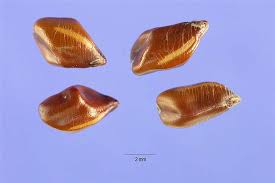
Malaysian Herbs-- Senna Obtusifolia Chinese Senna -(72) சீனத்து ஆவாரை

google.com, pub-7876390333399498, DIRECT, f08c47fec0942fa0
http://www.sidhhaherbs.blogspot.com


Senna obtusifolia   CHINESE SENNA 
Alternative name is Cassia humilis"  

அன்பர்களே! காடு போன்று வளரும் இச்செடியைப் பார்த்திருக்கிறீர்களா? 
இதன் நன்மைகளைக்கீழேபாருங்கள்
Senna obtusifolia (Chinese Senna or Sicklepod) is a legume in the genus Senna, sometimes separated in the monotypic genusDiallobus. It grows wild in NorthCentral, and South AmericaAsiaAfrica, and Oceania, and is considered a particularly serious weed in many places. It has a long-standing history of confusion with Senna tora and that taxon in many sources actually refers to the present species.

The green leaves of the plant are fermented to produce a high-protein food product called "kawal" which is eaten by many people in Sudanas a meat substitute. Its leaves, seeds, and root are also used in folk medicine, primarily in Asia. It is believed to possess a laxativeeffect, as well as to be beneficial for the eyes. As a folk remedy, the seeds are often roasted, then boiled in water to produce a tea. The plant's seeds are a commercial source of cassia gum, a food additive usually used as a thickener and named for the Chinese Senna's former placement in the genus Cassia. Roasted and ground, the seeds have also been used as a substitute for coffee. In traditional Korean medicine, they are called gyeolmyeongja (결명자) and usually prepared as tea. They are also used in Kampō (traditionalJapanese medicine) where they are called ketsumei-shi (ケツメイシ, 決明子) or by their Chinese name jué míng zǐ (traditional: 決明子,simplified: 决明子).

Abstract

Sicklepod (Senna obtusifolia) is a leguminous plant that infests soybean fields in the southeastern United States. Its seeds contain a variety of toxic, highly colored compounds, mainly anthraquinones together with a small amount of fat. These compounds contaminate and lower the quality of soybean oil when inadequately cleaned soybean seed from this area is processed. The sorting of sicklepod seed from a soybean harvest is an additional economic burden on the farmer beyond the cost of proper disposal of the weed seed to avoid worsening field infestation. Fortunately, sicklepod seed also contains substantial amounts of carbohydrates and proteins. These edible components when freed from anthraquinones have a market in pet food as well as potential in human foods because of the high galactomannan ratio of the polysaccharides. Sicklepod seed was dehulled, and the ground endosperm was defatted, followed by sequential solvent extraction of the defatted seed meal to isolate the anthraquinones, carbohydrates, and protein components into their respective classes. Each class of isolate was spectroscopically identified. Thanks, NCBI resource
physicianpackiam
http://www.sidhhaherbs.blogspot.com                      (72)

Malaysian Herbs--- Madagascar periwinkle (71) Catharanthus roseus--நித்தியக்கல்யாணி

google.com, pub-7876390333399498, DIRECT, f08c47fec0942fa0


 Catharanthus roseus--நித்தியக்கல்யாணி

CANCER KILLING SUPPORTING HERB

Catharanthus roseus, commonly known as the Madagascar periwinkle, is a species of Catharanthus native and endemic toMadagascar. Other English names occasionally used include Cape periwinkle, rose periwinkle, rosy periwinkle, and "old-maid".

http://www.sidhhaherbs.blogspot.com
Scientists who were intrigued by the fact that traditional Madagascan healers used rosy periwinkle to help treatdiabetes decided to research other potential medicinal uses for the plant. They discovered hidden treasures within rosy periwinkle, in the form of chemicals that they could use to create medicines for cancer patients.

Miraculous Results:

The chemicals from rosy periwinkle that are used in medicines, which are called vinca alkaloids, have reduced children’s leukemia survival rates so dramatically that some people call rosy periwinkle a miracle plant. Before vinca alkaloids were discovered, the average survival rate from children’s leukemia was just 10 percent. But now that doctors can treat children with drugs made from vinca alkaloids, about 95 percent of all children with leukemia survive.
It is an evergreen subshrub or herbaceous plant growing to 1 m tall. The leaves are oval to oblong, 2.5–9 cm long and 1–3.5 cm broad, glossy green, hairless, with a pale midrib and a short petiole 1–1.8 cm long; they are arranged in opposite pairs. The flowers are white to dark pink with a darker red centre, with a basal tube 2.5–3 cm long and a corolla 2–5 cm diameter with five petal-like lobes. The fruit is a pair of follicles 2–4 cm long and 3 mm broad
In the wild, it is an endangered plant; the main cause of decline is habitat destruction by slash and burn agriculture. It is also however widely cultivated and is naturalised in subtropical and tropical areas of the world.
The species has long been cultivated for herbal medicine and as an ornamental plant. In Ayurveda (Indian traditional medicine) the extracts of its roots and shoots, though poisonous, is used against several diseases.[citation needed] In traditional Chinese medicine, extracts from it have been used against numerous diseases, including diabetesmalaria, and Hodgkin's lymphoma.The substancesvinblastine and vincristine extracted from the plant are used in the treatment of leukemia  and Hodgkin's lymphoma.
This conflict between historical indigenous use, and recent patents on C.roseus-derived drugs by western pharmaceutical companies, without compensation, has led to accusations of biopiracy.

The species has long been cultivated for herbal medicine and as an ornamental plant. In Ayurveda and Siddha  (Indian traditional medicine) the extracts of its roots and shoots, though poisonous, is used against several diseases. 
     
In traditional Chinese medicine, extracts from it have been used against numerous diseases, including diabetesmalaria, and Hodgkin's lymphoma. The substances vinblastine and vincristine extracted from the plant are used in the treatment of leukemia and Hodgkin's lymphoma.

It can be dangerous if consumed orally.

 It can be extremely toxic, and is cited (under its synonym Vinca rosea) in Louisiana State Act 159.
As an ornamental plant, it is appreciated for its hardiness in dry and nutritionally deficient conditions, popular in subtropical gardenswhere temperatures never fall below 5 °C to 7 °C, and as a warm-season bedding plant in temperate gardens. It is noted for its long flowering period, throughout the year in tropical conditions, and from spring to late autumn, in warm temperate climates. Full sun and well-drained soil are preferred. Numerous cultivars have been selected, for variation in flower color (white, mauve, peach, scarlet, and reddish-orange), and also for tolerance of cooler growing conditions in temperate regions. Notable cultivars include 'Albus' (white flowers), 'Grape Cooler' (rose-pink; cool-tolerant), the Ocellatus Group (various colors), and 'Peppermint Cooler' (white with a red center; cool-tolerant).
C. roseus is used in plant pathology as an experimental host for phytoplasmas. This is because it is easy to infect with a large majority of phytoplasmas, and also often has very distinctive symptoms such as phyllody and significantly reduced leaf size.
physicianpackiam

http://www.sidhhaherbs.blogspot.com

Tuesday, July 2, 2013

Malaysian Herbs- Coral Jasmine-(70) Nyctanthes Arbortristis பவள மல்லி

google.com, pub-7876390333399498, DIRECT, f08c47fec0942fa0
http://www.sidhhaherbs.blogspot.com

Coral Jasmine

                                    Nyctanthes Arbortristis                                                    பவள மல்லி


Coral Jasmine is also known by many other names, depending on the country, for example, it’s called Lai Tau in Vietnam, Karanikaa in Thai, etc. Coral Jasmine has been used as a good old remedy for many medical symptoms. In addition, its flowers are beautiful with white petals and orange color tubes and charming by the sweet aroma.


It is also known as the Night Jasmine and
the plant is known as The Tree of Sorrow or The Sad Tree. It's
well into the season because the flowering period is from 
September to December. In Hindi, it's called "Harsinghar". In
Assam it is known as "Sewali".
The flowers bloom at night and by dawn, they fall to the ground.
The fragrance that wafts into the surrounding area is heavenly!
In the morning the ground below the tree forms a carpet of white
and orange. As you can see from the photo, the blooms are small 
and white with a bright orange tube. These are usually picked up
and used for worship or kept in bowls and platters for the frag-
rance.


The Coral Jasmine, also referred to as the Queen of the Night, is a shrub or small tree with stiff whitish hairs all over. It belongs to the plant family Oleaceae or Nyctanthaceae. To control sciatica, boil 1 teaspoon of the leaves of Coral Jasmine in a glass of water over a gentle fire. Drink this decoction as needed.
The Coral Jasmine, also referred to as the Queen of the Night, is a shrub or small tree with stiff whitish hairs all over. It belongs to the plant family Oleaceae or Nyctanthaceae. The leaves are opposite, 5 to 10 cm. long, ovate, and with a rounded base. The flowers that are delightfully fragrant, bloom at night, and are shed like tears during the day and hence the Latin species name, arbor-tristis meaning "a sad tree". The petals of the flower are white with a ring of orange in its hollow neck and shaft. The 2 cm. long capsules are more or less round in outline and compressed.
Parts Used: Leaves, flowers, bark and seeds

Medicinal Properties: Chest Congestion and Sciatica Remedy


Medicinal Use
  • Sciatica, which is characterized by shooting pain in the lower back, hips and thighs
  • Edema or swellings owing to the accumulation of fluids in the body
  • Chronic fevers
  • Chest and throat congestion, cough, and the accumulation of phlegm
  • Dandruff and scalp conditions
  • Intestinal worms
How to Use
  • To control sciatica, boil 1 teaspoon of the leaves of Coral Jasmine in a glass of water over a gentle fire. Drink this decoction as needed.
  • To take care of edema, apply on the swellings the flower paste prepared by grinding a handful of the flowers with some water.
  • To control chronic fevers, mix 1 teaspoon of the juice extracted from the leaves, with 1 teaspoon of good honey and take the mixture with some warm water. Use it till the fever subsides.
  • To take care of chest and throat congestion, cough, and the accumulation of phlegm, dry some bark collected from the plant, dry some bark collected from the plant, powder and store. Take a few pinches of this bark powder with a piece of Areca Nut (Areca catechu) and betel leaf (Piper beetle). Use only as an herbal medicine. Avoid consuming this mixture as soon as the conditions listed above are under control.
  • To control dandruff and other scalp conditions, apply the powdered seeds on the scalp. Leave for an hour and wash with soap nut fruits (Sapindus trifoliatus).
  • To get rid of intestinal worms, mix one teaspoon of the juice extracted from the leaves with one teaspoon of honey and a pinch of common salt and use it till the worms are passed out of the system.
Active Principles: Essential oils, mannitol, B-amyrin, B-sitosterol, hentriacontane, benzoic acid, glycosides, glucose and fructose.
physicianpackiam  

  http://www.sidhhaherbs.blogspot.com                                   (70)