google.com, pub-7876390333399498, DIRECT, f08c47fec0942fa0
http://www.sidhhaherbs.blogspot.com
அன்பர்களே சஹாரா பாலைவனத்தின் செடிகளை அறிவீர்களா?
 Gum Arabic
Gum Arabic is used primarily in the food industry as a stabilizer. It is edible and has E number E414. Gum arabic is a key ingredient in traditional lithography and is used in printing, paint production, glue, cosmetics and various industrial applications, including viscositycontrol in inks and in textile industries, although less expensive materials compete with it for many of these roles.
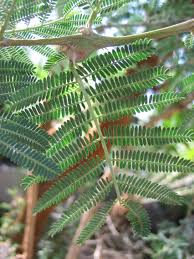
While gum Arabic is now produced mostly throughout the African Sahel, it is still harvested and used in the Middle East. For example, Arab populations use natural gum to make a chilled, sweetened, and flavored gelato-like desseGum Arabic mixture of saccharides and glycoproteins gives it the properties of a glue and binder which is edible by humans. Other substances have replaced it in situations where toxicity is not an issue, as the proportions of the various chemicals in gum Arabic vary widely and make it unpredictable. Still, it remains an important ingredient in soft drink syrups, "hard" gummy candies such as gumdrops, marshmallows, M&M's chocolate candies, and edible glitter, a very popular, modern cake-decorating staple. For artists, it is the traditional binder used in watercolor paint, in photography for gum printing, and it is used as a binder in pyrotechnic compositions. It has been investigated for use in intestinal dialysis. Pharmaceuticals and cosmetics also use the gum as a binder, emulsifying agent and a suspending or viscosity-increasing agent. Gum Arabic has been used in the past as a wine fining agent.

Powdered gum arabic for artists, one part gum arabic is dissolved in four parts distilled water to make a liquid suitable for adding to pigments.

A selection of gouaches containing gum arabic
Gum Arabic is used as a binder for watercolor painting because it dissolves easily in water. The pigment of any color is suspended within the acacia gum in varying amounts, resulting in watercolor paint. Water acts as a vehicle or a diluent to thin the watercolor paint and helps to transfer the paint to a surface such as paper. When all moisture evaporates, the acacia gum binds the pigment to the paper surface. After the water evaporates, the acacia gum in the paint film increases luminosity and helps prevent the colors from lightening. Gum arabic allows more precise control over washes, because it prevents them from flowing or bleeding beyond the brush stroke. In addition, acacia gum slows evaporation of water, giving slightly longer working time.
Photography
Printmaking
Gum Arabic is also used to protect and etch an image in lithographic processes. Ink tends to fill into white space on photosensitive aluminum plates if they do not receive a layer of gum. In lithography, the gum etch is used to etch the most subtle gray tones. Phosphoric acid is added in varying concentrations to the acacia gum to etch the darker tones up to dark blacks. Multiple layers of gum are used after the etching process to build up a protective barrier that ensures the ink does not fill into the whitespace of the image being printed.
It is also possible to print from black and white photocopies using a 50% Gum Arabic solution. This is carefully sponged onto the photocopy, and oil-based ink of any colour is rolled over the photocopy. The ink can be removed fairly easily from the white areas by carefully wiping with a damp sponge and the "paper plate" used to print using an etching press.
Pyrotechnics
Gum rabic is also used as a water-soluble binder in fireworks composition.
Physical properties
Effect on surface tension in liquids

Acacia senegal from Paul Hermann Wilhelm Taubert's Leguminosae, in Engelmann (ed.): Natürliche Pflanzenfamilien. Vol. III, 3., 1891
Acacia seyal from Paul Hermann Wilhelm Taubert's Leguminosae, in Engelmann (ed.): Natürliche Pflanzenfamilien. Vol. III, 3., 1891
While acacia gum has been harvested in Arabia, Egypt, and West Asia since antiquity, sub-Saharan acacia gum has a long history as a prized export. The gum exported came from the band of acacia trees that once covered much of the Sahel region: the southern littoral of the Sahara Desert running from the Atlantic to the Red Sea. Today, the main populations of gum-producing Acacia species are harvested in Mauritania, Senegal, Mali, Burkina Faso, Niger, Nigeria, Chad, Cameroon, Sudan, Eritrea, Somalia, Ethiopia, Kenya and Tanzania. Acacia Senegal is tapped for gum by cutting holes in the bark, from which a product called Kordofan or Senegal gum is exuded. Seyal gum, from Acacia seyal, the species more prevalent in East Africa, is collected from naturally occurring extrusions on the bark. Traditionally harvested by seminomadic desert pastoralists in the course of their transhumance cycle, acacia gum remains a main export of several African nations, including Mauritania, Niger, Chad, and Sudan. The hardened extrusions are collected in the middle of the rainy season (harvesting usually begins in July), and exported at the start of the dry season (November). Total world gum Arabic exports are today (2008) estimated at 60,000 tonnes, having recovered from 1987–1989 and 2003–2005 crises caused by the destruction of trees by the desert locust. Sudan, Chad, and Nigeria, which in 2007 together produced 95% of world exports, have been in discussions to create a producers' cartel.[4]
Political aspects
Senegambia
In 1445, Prince Henry the Navigator set up a trading post on Arguin Island (off the coast of modern Mauritania), which acquired acacia gum and slaves for Portugal. With the merger of the Portuguese and Spanish crowns in 1580, the Spaniards became the dominant influence along the coast. In 1638, however, they were replaced by the Dutch, who were the first to begin exploiting the acacia gum trade. Produced by the acacia trees of Trarza and Brakna, and used in textile pattern printing, this acacia gum was considered superior to that previously obtained in Arabia. By 1678, the French had driven out the Dutch and established a permanent settlement at Saint Louis at the mouth of the Senegal River, where the French Company of the Senegal River (Compagnie Française du Sénégal) had been trading for more than fifty years.[5]

Moorish tribes meet to trade gum arabic at Bakel on the Senegal river, 1890 (illustration from "Côte occidentale d'Afrique du Colonel Frey", pl. en reg. p. 100)
For much of the 19th century, gum Arabic was the major export from French and British trading colonies in modern Senegal and Mauritania. France in particular first came into conflict with inland African states over the supply of the commodity, providing an early spur for the conquest of French West Africa. As the Atlantic slave trade weakened in the early 19th century, The Emirate of Trarza and its neighbors, in what is today southern Mauritania, collected taxes on trade, especially gum arabic, which the French were purchasing in ever-increasing quantities for its use in industrial fabric production. West Africa had become the sole supplier of world acacia gum by the 18th century, and its export at the French colony of Saint-Louis doubled in the decade of 1830 alone. Taxes, and a threat to bypass Saint-Louis by sending gum to the British traders at Portendick, eventually brought the Emirate of Trarza into direct conflict with the French. In the 1820s, the French launched the Franco-Trarzan War of 1825. The new emir, Muhammad al Habib, had signed an agreement with the Waalo Kingdom, directly to the south of the river. In return for an end to raids in Waalo territory, the Emir took the heiress of Waalo as a bride. The prospect that Trarza might inherit control of both banks of Senegal struck at the security of French traders, and the French responded by sending a large expeditionary force that crushed Muhammad's army. The war incited the French to expand to the north of the Senegal River for the first time, heralding French direct involvement in the interior of West Africa. Gum Arabic continued to be exported in large quantities from the Sahel areas of French West Africa (modern Senegal, Mauritania, Mali, Burkina Faso, and Niger) and French Equatorial Africa (modern Chad) until these nations gained their independence in 1959-61.
Sudan
Although from the 1950s to the early 1990s, Sudan accounted for roughly 80% of gum Arabic production, today, that figure is under 50%. Hundreds of thousands of poor Sudanese are dependent on gum Arabic for their livelihoods. It is, however, still the world's largest single producer, and the production of gum Arabichttp:// is heavily controlled by the Sudanese government.
The connection between Sudan and Osama bin Laden brought the otherwise innocuous gum to public consciousness in 2001, as an urban legend arose that bin Laden owned a significant fraction of the gum arabic production in Sudan, and therefore one should boycott products using it.
This story took on somewhat significant proportions, mostly due to an article in The Daily Telegraph a few days after the September 11 attacks, which echoed this claim. Eventually, the State Department issued a release stating that while Osama bin Laden had once had considerable holdings in Sudanese gum Arabichttp:// production, he divested himself of these when he was expelled from Sudan in 1996.
In a press conference held at the Washington Press Club on 30 May 2007, John Ukec Lueth Ukec, Sudan's ambassador to the United States, threatened to stop the exportation of gum arabic from his country if sanctions were imposed. The sanctions proposed by the United States were a political response from the United States to the alleged connection between the government of Sudan and the Janjaweed militia group. Ukec made his speech surrounded by Coca-Cola products, although other sodas use acacia gum as an emulsifier, as well.
Ukec was quoted at the Washington press conference, "I want you to know that the gum Arabic which runs all the soft drinks all over the world, including the United States, mainly 80 percent is imported from my country," which he said after raising a bottle of Coca-Cola. According to the Washington Post, a reporter then asked if Sudan was threatening to "stop the export of gum Arabic and bring down the Western world." To which Ukec replied, "I can stop that gum Arabic and all of us will have lost this," and gestured to the Coke bottle.
THANKS, VIKI
Acacia gum has been used since 2650 BC, at the time of ancient Egypt, when it was used in the manufacture of bandages for mummies1 and for food. Its production area spreads far and wide across the “gum belt”, extending from Senegal to Eritrea, in dry and semi-arid areas of the south of Sahara.
Acacia gum is a tremendous economic resource for poor populations of the Sahel. In these territories, around three million people can live their lives thanks to the acacia gum crop2. Acacia trees also represents a great asset for farming and local communities, as it can acclimatise perfectly to dry and desert areas.
Besides its economic interest for the poorest local populations, the harvest of acacia gum has a very positive impact on environmental protection. Acacia trees nourish the soil by fixing nitrogen and restoring fertility. They give shelter and shade to farmers and animals while producing Acacia Gum. They are a sustainable resource, and their harvest increases the productivity of other cultivations and prevent desertification.
Acacia trees are also protecting local biodiversity: In addition to supplying forage for cattle, acacias are a genuine home for several bird species. The root system of acacias can go down to the water table while avoiding soil degradation3. Acacias are able to hold available water, even from remote depths. The grass carpet created by the bush prevents water run-off and contributes to the reconstruction of water tables. In periods of drought, when the water runs out, acacias provide a much-needed water supply to wildlife and domestic species.
Beyond the amazing natural properties specific to acacia gum5, it is interesting to know that the crop is also 100% organic. Acacia gum harvest can’t be mechanized. Acacia gum supplied by Alland & Robert, one the leading global suppliers well recognized by the largest food groups, is organic, GMO-free, and guaranteed without any pesticide6. Alland & Robert is involved in Africa with a policy of social, environmental, and economic responsibility.


