Sunday, May 3, 2015

Malaysian Herbs-Pomegranate-(108)-மாதுளம் பழம்.

google.com, pub-7876390333399498, DIRECT, f08c47fec0942fa0
http://www.sidhhaherbs.blogspot.com
-மாதுளம் பழம்.


-
மாதுளம் பழம்.

One of the oldest known fruits, found in writings and artifacts of many cultures and religions, the pomegranate (punica granatum) is an original native of Persia. This nutrient dense, antioxidant rich fruit has been revered as a symbol of health, fertility and eternal life.
Seeding a Pomegranate
  1. Cut the crown (protruding blossom end) off the pomegranate, removing with it some of the pale-yellow pith. Take care not to pierce the seeds within.
  2. Lightly score the skin in quarters from stem to crown end.
  3. Immerse the scored fruit in a large bowl of cool water and soak for 5 minutes. Holding the fruit under water, break sections apart with your fingers, separating the seeds from membrane. The seeds will sink to the bottom of the bowl.
  4. Discard skin and membranes. Drain the seeds and dry on paper towels.
Antioxidant Rich Smoothie 
Serves: 2 Preparation Time: 5 minutes
Ingredients:
8 cups organic baby spinach
1 cup pomegranate juice
1 cup blueberries, frozen
1 cup strawberries, frozen
8 dates, cut in half
2 tablespoons flaxseeds, ground
1/2 avocado, optional
Instructions:
Blend all ingredients together. This is delicious & very healthy!

If you're not familiar with the pomegranate, it is a red fruit with a tough outer layer; only the juice and the seeds inside are edible. Pomegranate juice is available year round, but you can purchase fresh pomegranates in most grocery stores from September through January. When refrigerated in a plastic bag, pomegranates keep for up to 2 months. Try tossing the seeds on a salad for a brilliantly colorful, crunchy, and nutritious addition.
Seeding a pomegranate may seem like a lot of work for just a piece of fruit but think again, getting at those seeds may be well worth it. The pomegranate is a nutrient dense food source rich in phytochemical compounds. Pomegranates contain high levels of flavonoids and polyphenols, potent antioxidants offering protection against heart disease and cancer. A glass of pomegranate juice has more antioxidants than red wine, green tea, blueberries, and cranberries.1
Amazing Clinical Results
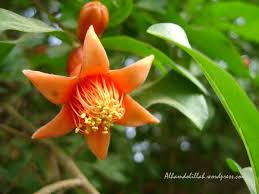
This fantastic little fruit recently made its way back into the news after some spectacular clinical results. Here's what you need to know:Image result for pomegranate tree
A compound found only in pomegranates called punicalagin is shown to benefit the heart and blood vessels. Punicalagin is the major component responsible for pomegranate's antioxidant and health benefits. It not only lowers cholesterol, but also lowers blood pressure and increases the speed at which heart blockages (atherosclerosis) melt away.
Recent medical research studied heart patients with severe carotid artery blockages. They were given an ounce of pomegranate juice each day for a year. Not only did study participants' blood pressure lower by over 12 percent, but there was a 30 percent reduction in atherosclerotic plaque. Just as astounding, participants who did not take the pomegranate juice saw their atherosclerotic plaque increase by 9 percent.2
In other studies, potent antioxidant compounds found in pomegranates have shown to reduce platelet aggregation and naturally lower blood pressure, factors that prevent both heart attacks and strokes.3
Not only are pomegranates good for your heart and blood vessels but they have been shown to inhibit breast cancer, prostate cancer, colon cancer, leukemia and to prevent vascular changes that promote tumor growth in lab animals.4 Several in vitro studies have shown this remarkable anti-cancer effect.5 Additional studies and clinical trials currently taking place are hopeful to reveal this fascinating effect on humans.
Also of note, pomegranate juice contains phytochemical compounds that stimulate serotonin and estrogen receptors, improving symptoms of depression and increasing bone mass in lab animals.6


Health Benefits of the Pomegranate
  • Most powerful anti-oxidant of all fruits
  • Potent anti-cancer and immune supporting effects
  • Inhibits abnormal platelet aggregation that could cause heart attacks, strokes and embolic disease
  • Lowers cholesterol and other cardiac risk factors
  • Lowers blood pressure
  • Shown to promote reversal of atherosclerotic plaque in human studies
  • May have benefits to relieve or protect against depression and osteoporosis


Many studies show that the pomegranate is one of the most powerful, nutrient dense foods for overall good health. These clinical findings clearly show a correlation between pomegranate compounds and their positive effect on both human and animal cardiovascular, nervous, and skeletal health. This is one fruit that you can't afford to exclude from your diet!

Saturday, April 25, 2015

Malaysian Herbs- (106) Ginsing-ஒரு வகை மருந்து வேர்

google.com, pub-7876390333399498, DIRECT, f08c47fec0942fa0
GINSENG-ஒரு வகை மருந்து வேர்


Ginseng is any of eleven different species of short, slow growing perennial plants with fleshy roots. Ginseng is believed to restore and enhance normal well-being. Ginseng is one of the most popular herbal remedies in the world today.

The herbs consist of a light-colored, forked-shaped root, a relatively long stalk and green leaves with an oval shape.
Ginseng is believed by many people to restore and enhance normal well-being and has traditionally been taken to aid a number of medical conditions, which we discuss 
Image result for ginseng
Ginseng is found in eastern hardwood forests and takes a minimum of five years to reach maturity. The plant features pointed green leaves, light green flowers and red berries. Ginseng is the most widely used medicinal plant in the world, largely due to the fact that it is great for stimulating the immune system and increasing energy levels. It’s also been shown to lower blood sugar and cholesterol levels.
Image result for ginseng
Feeling sluggish or tired lately? Need an energy boost? Then ginseng may be the answer to your problem. This herb is commonly used as an energy booster or to improve memory or concentration. Ginseng is a very popular herb and can also be used to treat a variety of health problems

Ginseng is a herb that has been used in the Asian culture for thousands of years. Americans have also been using it for quite some time - the Native Americans first used it to treat the wounded and exhausted. There are a few different types of ginseng, but only two that are considered to be the truest forms. The other forms are similar in nature to ginseng, like Siberian ginseng, but lack ginsenosides, the active ingredient in real ginseng.


Different varieties of ginseng root have been used as treatments in Asia and North America for centuries. Ginseng is one of the most popular herbal medicines in the world.

Why do people take ginseng?

Ginseng has traditionally been used for a number of medical conditions. However, only a fraction of them have been seriously researched.
There are two main types of ginseng: Asian or Korean ginseng (Panax ginseng) and American ginseng (Panax quinquefolius). Studies have found that the different types have different benefits. In traditional Chinese medicine, American ginseng is considered less stimulating than the Asian variety.
Although many other herbs are called ginseng -- like eleuthero, or Siberian ginseng -- they do not contain the active ingredient of ginsenosides.
Some studies have found that ginseng may boost the immune system. There is some evidence that one particular type of American ginseng extract might decrease the number and severity of colds in adults.
Several studies in people have also shown that ginseng may lower blood sugar levels.
There is some early evidence that ginseng might temporarily -- and modestly -- improve concentration and learning. In some studies of mental performance, ginseng has been combined with ginkgo. While these studies are intriguing, many experts feel that we need more evidence.
Image result for ginsengGinseng has also been studied as a way to improve mood and boost endurance as well as treat cancerheart diseasefatigueerectile dysfunctionhepatitis Chigh blood pressure, menopausal symptoms, and other conditions. While some of these uses are promising, the evidence isn’t conclusive.

How much ginseng should you take?

Standard doses of ginseng have not been established for any condition. Quality and active ingredients in supplements may vary widely from maker to maker. This makes it very hard to establish a standard dose.

Always buy ginseng from a well-respected company. Because it’s an expensive root, there is a risk that disreputable manufacturers might sell adulterated ginseng or include less than advertised on the bottle.

Can you get ginseng naturally from foods?

There are no natural food sources of ginseng. Ginseng is sometimes added to energy drinks and foods.

What are the risks of taking ginseng?

  • Side effects from ginseng are generally mild. Since ginseng can act as a stimulant in some people. Ginseng has been reported to cause nervousness and insomnia. Long-term use or high doses of ginseng may cause headachesdizzinessstomach upset, and other symptoms. Women who use ginseng regularly may develop breast tenderness and menstrual changes. There have also been some reports of allergic reactions to ginseng.
  • Interactions. Because ginseng may affect blood sugar levels, people taking drugs fordiabetes should not use ginseng without talking to their doctor first. Ginseng can interact with warfarin and with some medicines for depression. Do not take ginseng without consulting your doctor if you take any medicationsCaffeine may amplify ginseng’s stimulant effects.
  • Risks. To avoid side effects from ginseng, some experts suggest that ginseng shouldn’t be used for more than three months -- or sometimes just a few weeks -- at a time. After a break -- or “holiday” -- your doctor might recommend that you begin taking it again for another few weeks or months.
Given the lack of evidence about its safety, ginseng is not recommended for children or for women who are pregnant or breastfeeding.
See the links below for in-depth information on the two main types of ginseng: American ginseng and Asian or Korean ginseng.
physicianpackiam

Saturday, March 21, 2015

Malaysian Herbs - Red chilly -Chili pepper (105)சிகப்பு மிளகாய்

google.com, pub-7876390333399498, DIRECT, f08c47fec0942fa0
http://www.sidhhaherbs.blogspot.com

Chili pepper  - சிகப்பு மிளகாய்

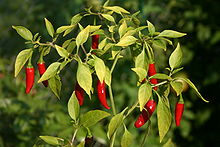
Chili peppers have been a part of the human diet in the Americas since at least 7500 BC. The most recent research shows that chili peppers were domesticated more than 6000 years ago in Mexico, in the region that extends across southern Puebla and northern Oaxaca to southeastern Veracruz, and were one of the first self-pollinating crops cultivated in Mexico, Central and parts of South America.


Christopher Columbus was one of the first Europeans to encounter them (in the Caribbean), and called them "peppers" because they, like black and white pepper of the Piper genus known in Europe, have a spicy hot taste unlike other foodstuffs. Upon their introduction into Europe, chilies were grown as botanical curiosities in the gardens of Spanish and Portuguese monasteries. But the monks experimented with the chili culinary potential and discovered that their pungency offered a substitute for black peppercorns, which at the time were so costly that they were used as legal currency in some countries.
Chilies were cultivated around the globe after Columbus

The substances that give chili peppers their intensity when ingested or applied topically are capsaicin (8-methyl-N-vanillyl-6-nonenamide) and several related chemicals, collectively called capsaicinoids. Capsaicin is also the primary component inpepper spray, a less-than-lethal weapon.

When consumed, capsaicinoids bind with pain receptors in the mouth and throat that are responsible for sensing heat. Once activated by the capsaicinoids, these receptors send a message to the brain that the person has consumed something hot. The brain responds to the burning sensation by raising the heart rate, increasing perspiration and release of endorphins. A 2008 study reports that capsaicin alters how the body's cells use energy produced by hydrolysis of ATP. In the normal hydrolysis the SERCA protein uses this energy to move calcium ions into the sarcoplasmic reticulum. When capsaicin is present, it alters the conformation of the SERCA, and thus reduces the ion movement; as a result the ATP energy (which would have been used to pump the ions) is instead released as thermal energy.

Red chilies contain large amounts of vitamin C and small amounts of carotene (provitamin A). Yellow and especially green chilies (which are essentially unripe fruit) contain a considerably lower amount of both substances. In addition, peppers are a good source of most B vitamins, and vitamin B6 in particular. They are very high in potassiummagnesium, and iron. Their very high vitamin C content can also substantially increase the uptake of non-heme iron from other ingredients in a meal, such as beans and grains.

Evolutionary advantages

Birds do not have the same sensitivity to capsaicin, because it targets a specific pain receptor in mammals. Chili peppers are eaten by birds living in the chili peppers' natural range. The seeds of the peppers are distributed by the birds that drop the seeds while eating the pods, and the seeds pass through the digestive tract unharmed. This relationship may have promoted the evolution of the protective capsaicin. Products based on this substance have been sold to treat the seeds in bird feeders to deter squirrels and other mammalian vermin without also deterring birds. Capsaicin is also a defense mechanism against microbial fungi that invade through punctures made in the outer skin by various insects

Benefits of Green Chili

Vitamin A
The most abundant nutrient in green chili is vitamin A, according to World's Healthiest Foods. The vitamin is a carotenoid, also known as retinol, associated with the antioxidant beta-carotene. Vitamin A is essential for the health and maintenance of bones, teeth, mucous membranes, eyes and skin, according to Medline Plus. The vitamin is essential for healthy eyes, as it produces retina pigmentation and promotes night vision. Vitamin A deficiencies result in weakened vision and immunit

Vitamin C

Vitamin C, or ascorbic acid, is the second most abundant nutrient in green chili. It acts as both an antioxidant and a vitamin, says Medline Plus. It is essential for the formation of collagen, scar tissue, ligaments, blood vessels and tendons. It also helps the body to maintain and repair wounds, bones, teeth and cartilage. As an antioxidant, it strengthens overall health and helps the body fight infections.
The leaves of every species of Capsicum are edible. Though almost all other Solanaceous crops have toxins in their leaves, chili peppers do not. The leaves, which are mildly bitter and nowhere near as hot as the fruit, are cooked as greens in Filipino cuisine, where they are called dahon ng sili (literally "chili leaves"). They are used in the chicken soup tinola. In Korean cuisine, the leaves may be used in kimchi. In Japanese cuisine, the leaves are cooked as greens, and also cooked intsukudani style for preservation.
physicianpackiam
 http://www.sidhhaherbs.blogspot.com                           (105)