Sunday, February 17, 2013

Malaysian Herbs-South African Leaf -(107) NAN HUI YE


 NAN HUI YE 
South Africa leaves

Summary : South Africa leaves the effectiveness of heat-clearing and detoxifying, feature heat and cooling blood, apply to lowering blood pressure, diabetes, wind-heat or blood-hot skin, and itching of the skin.


South African Plant or Pokok South Africa


That's the name of the plant’s cutting given by a two Chinese patients or rather cancer survivors. From just a small cutting, it grew to a considerable size, standing guard to the side entrance on the right, and on the left is the Momordica charantia plant, climbing the tall decorative plant. The other cutting - with me not really appreciating its value at that time - died on being neglected.http://


Just before Ramadan this year, i.e. since August 2008, I have been suffering a severe nagging pain in the left hip and had tried various remedies to no avail. Thought of it as possible bone metastasis. Then one day, a guy mentioned to DH that he heard people talking in the coffee shop, about one plant named "Pokok South Afrika" that is said to be good for all sorts of pain and chronic illnesses. Well, DH was excited and showed the plant to the man. He said the practice is by soaking three to four leaves in hot water, covering them and drinking the water after a while.


What we did was, we soaked 6 leaves in a mug of boiling hot water. Covered them for a while. DH drank the water and I ate the leaves. It was like making full use of the limited leaves. After five days, red spots appeared on our thighs. DH panicked and stopped, in spite of me telling him that it was probably healing crisis.

Well, I continued, but taking three to four young leaves with my rice. I chewed the bitter leaves with some rice and gravy at the beginning of my breakfast or lunch. After swallowing the leaves, after the bitterness cleared (not as bitter as Andrographis paniculata or Hempedu bumi leave, slightly less bitter than Elaphantos scaber or Daun tutup bumi), there is a subtle sweetness and what was more pleasing to me was the fact that the leaves took care of my appetite or craving.

In the past, after eating nasi lemak, I will be craving for a sandwich or whatever I saw other people were eating, but with the leaves, not only I was satiated by half a pack of nasi lemak, but that was all, in fact for the rest of the day if I chose not to eat. No hunger pang, no craving. And yes, I forgot, the nagging pain is now just 10%, or rather I am not bothered by the pain anymore. That was after taking the leaves for a week. However, after the fasting month, I had also continued my twice-week jogging in campus. That probably helped too.


Lilly Chew told me that the leaves from Pokok South Afrika is a "cure-all." Saw Har, the other survivor who gave me the cutting, told me that she knew one lady who had cancer of the uterus or ovary, and while waiting for op day, had taken the leaves regularly and pre-op ultrasound showed that the tumor had regressed and the op was canceled. I am sure, that lady had other healing practices.

We usually hear such fantastic story about others who tried recommended remedy. I really don’t know whether it is truly a cure. Well, a placebo is also a cure, what I call “faith at work.” What I know is that I can’t afford to wait for its therapeutic trials whether in animals or in humans, but what I knew from taking the leaves is that it works for me. I guess those recommended herbs that are bitter, are good for us survivors. The bitter the better. Probably the bitter chemical inhibits the growth factor for tumours or cancer. ANYONE KNOWING THE SCIENTIFIC NAME, PLEASE HELP!

Well, so much for medicinal herbs. By the way, some of the shrubs and trees in my garden are turning into other live forms.


14 Comments:

  • On November 10, 2008Anonymous Anonymous said…
    Dear Has,
    i think I have seen the pokok South Africa near the pedestrian path in Sri Hartamasin KL! It is v.tall and the stem ( or trunk) is thin, slender, and woody right. Daun nya macam sireh,but slimmer. The Nyonya who drew it says it is good for health and chews 1 raw leaf every day it seems. She doesn't know the Malay or English name. Next time I am up in KL I will get Anak Pokok to plant here in Kampung and ask Nyonya for the Chinese name.

    Yes, it is very bitter....

    Salam, Azmi
  • At November 10, 2008Blogger Has said…
    Dear Azmi,

    Actually, it is easily grown from cutting, so potong banyak2 dan cucuk aje dalam polybag...

    Yes, bitter, but try chewing and swallowing, and take some bread or rice and you can actually taste a subtle sweetness...
  • At November 11, 2008Anonymous Anonymous said…
    Dear Dr Has,
    Been reading your informative blog quite a while. Wonder if I can have your email or number so that I can get my C survivor friend to communicate with you. -Umi
    Thank you.
  • At November 11, 2008Blogger Has said…
    Dear Anon;

    My e-mail: nadim_s7@yahoo.com
  • At December 25, 2008Anonymous Anonymous said…
    hi Has, thanks for sharing such useful info. yeah, 'South African Leaf' is convincingly effective as far as I know. we have some in our compound. it has helped my parents with their joint pains, balance BP and cholesterol, and helped my diabetic aunt cut down her insulin intake tremendously. I started consuming it also after reading from your blog, chew one raw leaf each day, and you are right, I developed rashes on my thighs. however, the pain in the neck is gone and also i see detox effects in my toilet habits. I have stopped 5 days as the rashes are pretty unbearable, but I think I'm going to chew a raw leaf again tomorrow.
    i read in China, people juice the leaves with green apples and also make sandwiches with it. The Chinese name 南非叶
  • On December 28, 2008Blogger Has said…
    Dear Anon,

    The rash, or in my case impetigo-like spots is pretty worrying. It became troubling after a month of consuming the leaves. It is good to write about it in a blog, thus I could reflect on the time frame for the side effects to because real nuisance.

    Another thing, either South African leaves or the peria katak, had effectively wiped out all the friendly bacteria in my system, resulting in itchy vigina and perianal region, the consequence of overgrowth in candida. Candida is not good for cancer patients.

    Thus effective from mid-December, I stop both Peria Katak and South African leaves.

    Now, I am on just these herbs: 1/3 daikon a day, the clinacanthus nutas, strobilanthes cripus, and wheatgrass.

    Thank you for sharing the info on the South African plant. Do you know its scientific name?
  • At January 01, 2009Blogger ~PakKaramu~ said…
    Selamat menyambut tahun baru
  • At August 11, 2009Blogger Josh said…
    Does anyone know of anywhere in North America to get such natural herbs for cancer patients? I am in Alberta, Canada and desperately looking for alternatives or supplements to the traditional treatments of cancer.
  • At August 17, 2009Anonymous Anonymous said…
    Dr. Has, does this look like the plant you mentioned as Pokok South Africa?

    http://nileherb.blogspot.com/2008/09/gynura-procumbens-lour-sambung-mjawa.html

    joechia
  • At August 18, 2009Blogger Has said…
    Josh, I'm afraid I can't help with your question.

    Joechia, the plant shown in that blog is gynura procumbens or in Malay Pokok Sambung Nyawa.
  • At August 18, 2009Anonymous Anonymous said…
    josh, why don't you try this website where you can get more info. http://cacare.com/index.php?option=com_easyfaq&task=view&id=287&Itemid=39.

    also check up on http://www.amazonbioenergetics.com/reports-graviola-drapeau.htm

    best wishes,

    joechia
  • At August 18, 2009Anonymous Anonymous said…
    Dr, this site says that Sambung Nyawa can grow up to 6 meters tall . Don't you think this is the pokok Saouth Africa ?.

    http://www.globinmed.com/IMRContent/detail.aspx?id=BOT00119

    joechia
  • At April 04, 2010Blogger EritaGarden said…
    I came to know about this tree from my brother in Segamat, Johor. According to him, it is very effective to reduce his high blood pressure. He took 3 to 4 leaves and dipped it in hot water, like making Chinese tea. He drinks only twice a week.

    It's bitter, but after a while, it felt like "sweetness" (don't know how to describe the taste, it's close to "sweet").

    As for me, I felt I could sleep better at night after one glass.

    I just planted 42 trees at my house in Puchong, KL. So easy to plant lar, even for people like me, who have never successfully grown any plant also can grow this tree. Just poke it into the ground and it will magically grow like no body business (I have a sense of success and satisfaction planting this tree.)

    I saw the one in my brother's house can grow up to 15 feet, so not only it can be a good medicine tree, it can also be a very good fencing tree and sun blocker too. Thats why I planted 42 trees along my house boundary.

    After 6 months, if you guys wanted to plant, may be you can come to my house to get it for free.

    This is really a God sent tree.At July 03, 2011Blogger Dr. H said… Thanks  to Dr. from  physician packiam
    At last, the scientific name is Vernodia amygdalina as in WIKI:

    http://en.wikipedia.org/wiki/Vernonia_amygdalina


http://www.sidhhaherbs.blogspot.com


Thursday, February 7, 2013

Malaysian Herbs-Mulberry Plant (56)-Silkworm Tree

google.com, pub-7876390333399498, DIRECT, f08c47fec0942fa0
MULBERRY TREE    -zetarra marugatze arbolean

http://www.sidhhaherbs.blogspot.com


Morus, a genus of flowering plants in the family Moraceae, comprises 10–16 species of deciduous trees commonly known as mulberries growing wild and under cultivation in many temperate world regions.

Mulberry tea reduces sugar and cholesterol levels in your blood. It adjusts the blood pressure to normal level and reduces the risk of liver cancer.

File:Silkworm mulberry tree zetarra marugatze arbolean2.JPGThe leaves, fruits, and stems of mulberry trees have been used for over 5,000 years. Varieties include wild, white, black, and red mulberries. They grow all around the world. The edible berries are both tasty and nutritious, and the leaves can be eaten as a vegetable or brewed into tea. The leaves of the mulberry tree, are used to make tea. The tea has the ability to block the absorption of sugars, which makes it healthy for diabetics.

Mulberry tea helps to flush fluids and toxins out of the body. It is considered a diuretic. Also, it helps with weight loss because of its ability to block the absorption of sugars.


The mulberry most resembles a raspberry but is so soft that harvesting is difficult. It must be eaten on the day it is picked but doesn't pack or travel well, so the only reliable way to enjoy the mulberry's unique, fresh flavor is to grow your own.
It is usually grown as a standard tree, often with the lower branches removed. The tree grows to an incredible age and becomes beautifully gnarled and twisted over the years, which makes it a favorite with children for climbing.
It may lean and with a mature spread of 9m (30ft), it is unsuitable for the small garden, unless you are happy to be in total shade.
The mulberry will succeed in all but the coldest areas but prefers a position in full sun. Pliny the Elder described it as "the wisest of trees" because it comes into leaf and flower after all risk of frost has passed and drops its leaves in early autumn before the onset of cold weather.
Being self-fertile it crops every year. In northern gardens, young plants may suffer in a cold wind and an alternative method of growing is to train it as an espalier against a sunny south-facing wall.
The mulberry will thrive in most soils providing the drainage is good, with heavy crops even where the ground is poor and infertile. A neutral to slightly acid soil with a pH of between 5.5 and 7 is ideal.
A mulberry tree may be grown in a large container but will eventually outgrow the available root space. When planting, use a soil-based compost and position the tree so that the finished level is 7cm-10cm (3in-4in) below the top of the container. This will allow for an annual 2cm-3cm (1in) layer of fresh compost.
A bare-root tree may be planted in winter, but the roots are brittle so take care when backfilling with compost. Use your fist rather than your foot to firm the soil. Container-grown trees may be planted at any time of the year but avoid purchasing plants that are pot-bound with a tangled mass of roots.
Take semi-ripe cuttings in summer, pulling off this year's growth with a small heel of older wood. Root in a gritty, free-draining compost.
The simplest method of propagation is to root a large hardwood cutting (a "truncheon") in late autumn. Select a three-year-old branch that is as thick as your wrist and up to 1m (3ft) long. Drive it into the ground at least 30cm (1ft) deep.
The top of the branch is cut at an angle to prevent rainwater lying on the cut surface. It can be rooted where it is to be grown. Where more than one is being propagated, space at least 60cm (2ft) apart. The following winter ease the rooted plant out of the ground without damaging the roots.
For the first two years after planting, make sure that the mulberry is never short of water. Until the plant is established the roots are slow to spread and will benefit from 10cm (4in) of bark or compost mulch. An annual, early summer application of Growmore at 60g per square meter scattered over the root zone will encourage strong growth. A high-potash liquid feed of tomato fertilizer in early August will strengthen the branches.
Once established, little pruning is necessary. Mulberries bleed if pruned when the sap is rising, so remove broken, dead or damaged branches in early winter. Prune young trees in late summer when the growth has settled down. Remove any low branches and those crossing into the centre of the tree back to the main trunk.
Old branches can be brittle and a heavy crop may cause them to crack or break. Use forked sticks as props to support the main branches from summer onwards.
Fruit ripens for weeks during late August and early September. Birds love mulberries and netting is recommended to ensure that the crop is not eaten before you can harvest it.
The simplest method of harvesting is to spread a cotton, plastic, or fine-mesh sheet on the ground and shake the tree every other day. There will be leaves, twigs, debris, and the occasional unripe berry mixed in with the ripe fruit. Either pick out the fruit by hand or put everything into a tub of water. The ripe fruit will sink and the debris may be skimmed off the surface.
When ripe fruit falls on the surface of a patio it will make unsightly stains (one good reason why you should not plant a mulberry over a patio). Beware of carrying squashed fruit into the house on shoes. If the tree is planted as a specimen in a lawn, the grass must be kept short at harvest time so the fruit is easy to spot.
http://youtu.be/rdm5ARzrFbc

Turning cocoon into silk rope for five generations

ISTANBUL - Anatolia News Agency

Producer Hasan Büyükaşık says they get a nearly 1,700-meter-long silk rope from one cocoon and color them using meddar. AA photosThe business of the silkworm, which is to produce ropes from cocoons, is being made using traditional methods by a local of Hatay, despite modern technology. Hasan Büyükaşık has been in the business for years, as the fifth generation in a facility in the garden of his house


Hasan Büyükaşık, a local of the southeastern province of Hatay, has been recently been getting involved with his father’s business of producing silkworms with traditional methods. Büyükaşık, 78, produces silk products in his garden facility with his wife and children and exports them to countries from the U.S. to China. 

Speaking to the Anatolia news agency, Büyükaşık said silkworm producers began working every spring when berry trees begin to blossom. He said they put the cocoon on the ground and that worms are born after a 19-day incubation period.

Then worms begin to spin the cocoon and finish it in 10 days. “It is a supernaturalistic thing. Some worms remain in the cocoon that they spin and some leave it. We put the cocoons that are in good condition in hot water and try to get the ropes from it with the help of a specially made broom. We can get a nearly 1,700-meter-long silk rope from one cocoon, then we process it and get colorful ropes using Madder. These valuable ropes turn into dresses, scarves, or sheets,” Büyükaşık said. 

He said that when he was a child there was always a furnace in the garden of every house but that this is now history because of developing technology. “I am in love with this business. It has been continued in my family for five generations and I have never left it,” he said. 

Despite modern technology, Büyükaşık’s business has always used traditional methods in the garden of his house. His eight children and wife also work with him to produce the silk. “In the past, I used to weave the silks on a bench in the garden of my house. We have improved our business over time and established a big facility next to my house. Along with my eight children and wife, I also employ nine people. Overall, we have produced ropes from nearly six tons of cocoons. We hope this year will be even more productive,” he said. 

Büyükaşık said they sold most of their products in Turkey, although they exported 20 percent of their products to foreign countries, from the U.S. to Italy, and China.

Just as the silkworm, we also have a story for the silk. When they hatch out, silkworms look like a coil of brown or black feathers. In time the colour fades and bleaches. Also, they molt and soft skin comes out. These silkworms, which are as small as a pin live five ages throughout their six-week life. Each age lasts seven to eight days; then they sleep one to two days. Silkworms sleep four times in their short lives. They get mulberry leaves when they wake up. Each silkworm is

 called “lady” when they wake up. In the last “lady”, they start to cocoon.
When the insect raises its head as if looking for something, which means silk production is beginning. In the meantime, branches of trees such as oak and pine are plunged in the earth and the silkworms try to find a place for themselves among these branches with a good rustling. The production is about to begin.
physicianpackiam

       (56)


Saturday, February 2, 2013

Malasian Herbs-Coconut-Cocos nucifera,(55)-தென்னைமரம்

google.com, pub-7876390333399498, DIRECT, f08c47fec0942fa0

http://www.sidhhaherbs.blogspot.com

Cocos nucifera. 

Coconut trees grow in warm weather.

Coconut water nutrition facts

Coconut water is actually the juice in the interior cavity or endosperm of young, tender coconut. Its water is one of nature’s most refreshing drinks, consumed worldwide for its nutritious and health-benefiting properties.
The water is actually obtained by opening a tender, green, healthy, and undamaged coconut. Inside, its clear liquid is sweet, and sterile and composed of unique chemicals such as sugars, vitamins, minerals, electrolytes, enzymes, amino acids, cytokine, and phyto-hormones. In general, young and slightly immature coconuts are gathered from the coconut tree after they reach about 5-7 months of age for the purpose of reaping its drink.
Coconut water is now one of the fastest growing beverages in the United States and United Kingdom.”
There is a wind blowing across the United States and Europe that should do us much good. That is if we avail ourselves of the opportunities it brings to our threshold. This wind interestingly provides us an antidote to our tight grip on crude oil. It has to do with the unexpected spike in the demand for coconut fruits in the West that has so far outstripped global supply.
Coconut water is now one of the fastest-growing beverages in the United States and United Kingdom. This is not unconnected to its great taste, nutritional value, and natural hydration qualities. There are currently 250 companies that have a beverage with coconut water content.

இளநீர்
-
Young Fruit Water

Reports reveal that in the U.S., coconut water in the drinks category is already worth over $350million while in the U.K.; it is projected to be worth £100million by 2014. New Nutrition Business in its 2012 report disclosed that the number of coconut water beverage launched in Europe quintupled from seven to 36 brands between 2009 and 2011.
Back home in Nigeria, the demand for coconut has surpassed the production capacity for decades. While national consumption is on the increase, the production of coconut appears to be limited to the southwest with the local demand being hinged on its oil and nuts.
With a growing population and coconuts mostly consumed in the northern part of the country, Nigeria has resorted to importing the fruit from neighboring countries such as Benin, Togo, and Ghana. At present, the Nigerian market absorbs over 50 percent of coconuts from Ghana.
One cannot but ponder on this craze that is steadily wearing on the world. In some cultures, the coconut tree is widely referred to as the tree of life. They see it as having an overwhelming versatility where each element of the tree is useful in some facet; be it the oil extracted from it acting as natural skin and hair moisturizers or the fruit being a great source of potassium higher than that of banana.
Various claimed benefits include coconut water which includes high potassium that helps prevent strokes, heart attack, hydration, and hangovers. It is also acclaimed to help prevent cancers and heart diseases and aid slimming, helps raise metabolism, boost the immune system, and reduce heartburn. The benefits are non-stop.

The foregoing provides a background into why coconut fruits are increasingly becoming a favorite overseas. Athletes and fitness fanatics are copiously downing coconut water for its high potassium and mineral content that promises fast, natural hydration

Granted that coconut with its derivatives has become a highly sought-after commodity in the international market and it can be produced in Nigeria, there is only one option available to Nigeria- she should as a necessity and urgency begin strategics on means to adequately reap from this God’s gift to humanity.
We can’t continue singing about our desire to diversify from a mono-economy and not make the most of opportunities like this when they present themselves. Many like the former education minister, Oby Ezekwesili, have wished that our oil reserve dried up so that the country can become interested in other sectors. I don’t see that as the stimuli we really need.
With this stupendous desire for coconut- which can be comfortably produced in Nigeria- the government doesn’t need another inducement to jolt her from the extreme reliance on oil. The high demand for coconut is enough for the government to be distracted from crude oil by venturing into a new vista that will be greatly rewarding to the country.

Found throughout the tropic and subtropic area, the coconut is known for its great versatility as seen in the many domestic, commercial, and industrial uses of its different parts. Coconuts are part of the daily diet of many people. Coconuts are different from any other fruits because they contain a large quantity of "water" and when immature they are known as tender nuts or jelly nuts and may be harvested for drinking. When mature they still contain some water and can be used as seednuts or processed to give oil from the kernel, charcoal from the hard shell, and coir from the fibrous husk. The endosperm is initially in its nuclear phase suspended within the coconut water. As development continues, cellular layers of endosperm deposit along the walls of the coconut, becoming the edible coconut "flesh".[4] When dried, the coconut flesh is called copra. The oil and milk derived from it are commonly used in cooking and frying; coconut oil is also widely used in soaps and cosmetics. The clear liquid coconut water within is a refreshing drink. The husks and leaves can be used as material to make a variety of products for furnishing and decorating. It also has cultural and religious significance in many societies that use it.

தென்னை மட்டை
In countries like Indonesia, the Philippines, and Brazil, known as the world’s largest producers of coconut, their governments sensed an economic opening in coconut and have since acted swiftly. They had initiated and are now implementing policies that would encourage and boost local production of the produce.
We can take a cue from them on this- after all, Malaysia is today the world’s largest producer of palm trees as a result of the lessons they took from us in the 70s. Nature has made it incumbent on us to grow coconuts by granting us the land type and climatic conditions that support its production. We should then not disappoint nature by not taking to the plow.

COCONUT  AND COCONUT OIL

                                                   தேங்காய்-தேங்கெண்ணை

It’s a rich moisturizer, it’s cheap, it’s versatile, it’s antimicrobial, anti-fungal and antibacterial, has a decent amount of antioxidants, and it smells like baked goods.

  Coconut fibres-தேங்காய்நார்
 Coconut fiber which is considered as the natural fiber which is taken from the coconut husk and tanned and compressed into the bales. These coconut fibers are used for car seat fillers, rope, furniture cushions, rope, mats, rugs, mattresses and many other uses. It can also be personalized according to requisite client requirements. 
physicianpackiam
 

http://www.sidhhaherbs.blogspot.com

                                             (55)


Wednesday, January 30, 2013

Malaysian Herbs-AlOE VERA-(54)குமரிச்செடி

google.com, pub-7876390333399498, DIRECT, f08c47fec0942fa0
http://www.sidhhaherbs.blogspot.com

Aloevera Barbadensis


ALOE VERA-                                                                 குமரி -என்றும் இளமை

This plant has been recorded back to biblical times and is highly regarded as an all-purpose herbal plant. The Aloe Vera plant does not come from the cactus but rather from the lily family.

 குமரிச்செடி மிகுந்து காணப்பட்டதால் குமரிக்கண்டம் என்ற காரணப்பெயரை நம் முன்னோர்கள் சூட்டியுள்ளனர்.

Long polysaccharides in the North African aloe vera

plant could help reduce illness in HIV/AIDS and 

cancer patients. At the same time the cactus plant

 may also help reduce poverty in some of Bali's dry

 areas.
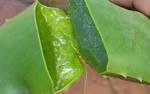
Bali is currently producing around 15,000 liters of aloe vera weekly for the European market, according to Floris Schaaper, an engineer with aloe vera producer, PT Alove Bali. That volume, harvested on 80 hectares, is expected to grow to more than 30,000 liters weekly in the coming months.
"By 2012 the plan is to have 500 hectares of aloe vera producing 20 million liters per year. That can be processed at this existing factory," said Schaaper of the PT Alove Bali factory in Blahbatuh, Gianyar. The modern factory will be formally opened April 5.
Employing more than 200 people across its aloe vera farming and processing system, Alove Bali is having a positive economic impact on the families of Blahbatuh and other areas under aloe vera cultivation.
"We are planting in areas where rice is no longer a viable farm crop due to a dropping water table. The move to aloe vera means farmers can continue to work their lands," said PT Alove Bali coordinator, Made Karang. He points out aloe vera provides farmers an income three times higher than rice grown on marginal lands.
"PT ALove Bali was started by Hank and Peter Zwanenberg from Holland some years ago. They built a villa here in 1999 and saw the local people did not have jobs. They wanted to find a way to create employment. They saw the employment situation grow even worse after the Bali bomb in 2002," explains Karang of the beginnings of aloe vera in Bali.
With rice fields in their immediate areas lying fallow due to lack of water, the Zwanenbergs turned their attention to low-water farming. A worldwide shortage of aloe vera and strong European markets suggested the hardy cactus could be the ideal product that would offer sustainable farming into the future for Bali's dry land farmers.
"That was three years ago. We now have 30 hectares under lease and a further 50 hectares being farmed cooperatively," said Karang.
The cooperative farming system offers farmers the opportunity to shift from marginal rice growing in areas of low water to aloe vera farming at no cost.
"We give farmers the initial aloe vera plants and they are also paid four million rupiah per hectare every six months to maintain the plants until they are old enough to harvest. From that time on they are paid per kilo," said Karang.
Schaaper adds that once aloe vera has been planted it reproduces so new plants are always available for farmers. Only the five to nine largest leaves of aloe vera are harvested and the plant continues to produce for 10 to 15 years. Farmers can plant young aloe vera taken from mature plants so they have a continuous crop.
With increased production, PT Alove Bali hopes to export into the lucrative Asian market, as well as other countries such as the United States. Aloe vera is used worldwide in cosmetics, shampoos, health drinks, and medical products. Its use in treating burns is also well documented.
According to Schaaper, it is the very long Alverose polysaccharides in aloe vera that are doing the miracle work. Polysaccharides are complex carbohydrates made up of many monosaccharides, however, only aloe vera has the Alverose polysaccharide that is believed to stimulate the reproduction of white blood cells. White blood cells are responsible for healthy immune systems and wound healing.
Recent scientific studies on rats established a 40 percent faster wound healing rate using aloe vera. Netherlands-based aloe vera company Bioclin is currently running aloe vera trials on HIV and oral wound patients in South Africa.


Aloe Vera - Historical Myth or a Modern Day Miracle?
www.malaysianherbals.com
AAAloe Vera has been well documented throughout the centuries, from very early transcripts on the walls of Egyptian temples  dating back as far as 4000 BC to the current library of information we have available today.  The Egyptians called it the 'plant of immortality' and it is rumored that the two famous Egyptian queens Nefertiti and Cleopatra both used it in their beauty regimes.  Alexander the Great is reputed to have conquered the African island of Socotra in order to use the Aloe Vera plants that grew there to heal his wounded soldiers and Mahatma Ghandi was reputed to take Aloe Vera to help him through his frequent 'fasts'.     During the Middle Ages and the Renaissance period, the medicinal use of Aloe Vera spread across  Egypt, India, Africa, China, the Americas, and into Europe and it is reported that famous explorers Christopher Columbus and Marco Polo both wrote about the "miracle plant".  Indeed it is largely down to the highly educated Jesuit priests of Spain who were well versed in the Greek and Roman texts surrounding this plant who could take the credit for introducing Aloe Vera to the "New World".

There are many different types of Aloe (over 400 in fact) but it is the Aloe Barbadensis Miller ( Aloe Vera ) that is the most intriguing and the one with medicinal and healing properties.   Today Aloe Vera is widely used as both a general tonic as well as countless medicinal benefits ranging from treatment for burns, inflammation, skin disorders, immune system disorders, and countless others.  Aloe is not just for humans either - it works equally well on animals and as you can see from the second picture beside of the Royal Veterinary College's coat of arms, a Centaur, the mythical healer is carrying a shield bearing the Aloe plant.

 KUMARI
 In Sanskrit, it means a young, virgin girl. As the herb imparts youthful energy and enhances feminity, hence the name. It also mitigates kumari roga i.e. menstrual disorders, so it might have been named kumari. It has various synonyms like ghrta kumari – its juice being sticky like ghee (clarified butter), dirghapatrika has big and long leaves, bahupatra – it has many leaves, etc. It is one of the herbs mentioned in all ancient Sanskrit scriptures. It has been categorized as bhedaniya – accumulation – breaking herb, pliharogaghna – ameliorating diseases of the spleen and netrarogaghna – alleviating ophthalmic diseases.
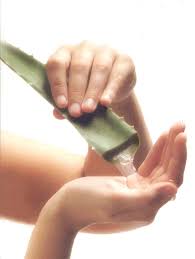
The plant grows in a semi-wild state throughout the drier parts of India. It is also cultivated. The plant grows 30-60 cm in height, and is a perennial, with a short stem. The leaves are large, 40-50 cm long, thick, fleshy, lance-shaped, with a sharp apex and spiny margins. The color of leaves varies from species to species – grey to bright green, chocolate brown to black.
The botanical name of kumari is Aloe indica and it belongs to the family Liliaceae. It is also called Aloe barbadensis. The pulp contains a glucoside, barbaloin, isobarbaloin and barbalion. The leaves also contain glucose, galactose, galacturonic acid, mannose, aloesin, and volatile and nonvolatile oils, gum, resin, emodin, chrysophanic acid.

Properties


The whole plant kumari is bitter and sweet in taste, seed in the post digestive effect and cold in potency. It alleviates all three doshas. It possesses heavy, unctuous, and oily attributes.
The dried pulp of leaves or solid extract – elio, is bitter in taste, pungent in the post-digestive effect, and hot in potency. It possesses dry, hot, and light attributes. It is a good rejuvenating and contract uterine muscles.

Uses

The fresh gel or its solid extract is used for medicinal purposes. The plant is equally salutary both, internally as well as externally. In inflammatory conditions, associated with pain and swelling, the external application of its leaf extract, bola-elio, is very beneficial. It is also an effective remedy for chronic wounds, as it possesses vranasodhana wound cleansing and vranaropana wound healing properties. To alleviate the swelling and pain due to an enlarged spleen, the pulp with turmeric powder, applied externally is said to be helpful. The pulp when applied on the forehead relieves the headache. It is also useful in conjunctivitis, for which the strained juice of the pulp is instilled in the eyes. In inflamed piles, when the pulp is applied externally, it alleviates the pain and imparts a cooling effect. Kumari pulp gives excellent results in burns and scalds. The bola effectively reduces hematoma, the accumulation of blood, due to traumatic injuries. Nowadays, it is one of the popular cosmetic aids as it moisturizes, heals and regenerates the skin.
Internally, kumari is useful in a number of diseases. In small doses, it is an effective appetizer, digestant, and liver stimulant, and in large doses, it works as an anthelmintic and purgative. It is very useful as a blood purifier, hence valuable in skin diseases and jaundice due to viral hepatitis. It is one of the most used ingredients in liver preparations, available in the market. As it increases the urine output, it works well for urinary problems. The Nasya nasal drops, of its leaf juice with ghee are a traditional panacea for jaundice. The combination of its leaf juice, vasa juice, pippali and clove powder when given with honey, relieves the cough very effectively. In splenic diseases, the leaf juice is beneficial when given with turmeric powder. Abdominal pain due to flatulence is instantly relieved with kumari ghrta – medicated ghee of kumari, and marica powder.
In ascites and anasarca, the leaf juice works well with Arogyavardhini. The enlarged spleen due to anemia, chronic fever of catabolic disorders like meda ksaya, rakta ksaya is effectively treated with leaf juice and turmeric powder. To correct anemia, the leaf juice is better given with iron preparations like loha or mandura basis. The leaf extract – bola is one of the popular medicines for menstrual disorders, as it contracts the uterine musculature and improves the endometrial circulation. It is contraindicated in pregnancy for the risk of abortion.

Kumari is a valuable herb in the treatment of tumors. It is an effective medicament for the skin diseases like scabies, erysipelas, multiple abscesses, etc. For such, the leaf juice with turmeric powder is a very effective combination to combat infection and pus formation. The pulp can be used as an aphrodisiac, to augment seminal fluids. As a domestic remedy, the leaf juice is used for various ailments. It is used to increase the appetite and cleanse the bowels, with honey. It alleviates pitta when taken with rock candy. With a pinch of salt, the juice of roasted leaf is effective in cough and bronchial asthma. It is used as a general tonic, with sugar. Kumari combines well with manjistha and haridra (turmeric) in treating raktapitta, in epistaxis, and bleeding per rectum.

Caution


  Aloesin and aloesone isolated, malic, citric, and tartaric acids from leaves The jelly from leaves composed of four partially acetylated glucomannans which differ in their glucose to mannose ratio and acetyl content.

The leaf extract–bola should be used in small dosages for a short duration. In large doses, it causes pain and bleeding per rectum. It is strictly contra-indicated in pregnancy.
physicianpackiam

    http://www.sidhhaherbs.blogspot.com                  (54)