http://www.sidhhaherbs.blogspot.com

இந்தியாவிலும் மலேஷியாவிலும் பல இடங்களில்
இம்மரங்கள் உள்ளன. Couroupita guianensis
Couroupita guianensis
Couroupita guianensis
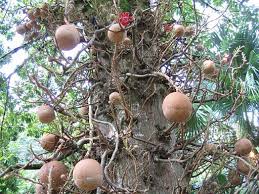
whose common names include Ayahuma and the Cannonball Tree, is an evergreen tree allied to the Brazil nut (Bertholletia excelsa), and is native to tropical northern South America and to the southern Caribbean. In India it has been growing for the past two or three thousand years at least, as attested by textual records, hence it is possible that it is native to India also. It's rare, but also found in Bangladesh. It is known as নাগকেশর(Nagakeshar) or নাগালিংগম(Nagalingam) in Bengali. It's part of the family Lecythidaceae and grows up to 25 m (82 ft) in height. The "Cannonball Tree" is so called because of its brown cannon-ball-like fruits. The majority of these trees outside their natural environment have been planted as a botanical curiosity, as they grow very large, distinctive flowers. Its flowers are orange, scarlet and pink in color, and form large bunches measuring up to 3m in length. They produce large spherical and woody fruits ranging from 15 to 24 cm in diameter, containing up to 200 or 300 seeds a piece. Both the fruit and the flower grow from stalks which sprout from the trunk of the tree. Cannonball Tree flowers are found on thick tangled extrusions that grow on the trunk of the tree; these are found just below the foliage branches, and right down to just above ground level. The extrusions however, can range from two to six feet in length.
The trees are grown extensively in Shiva temples in India. In Hindi it is called Shiv Kamal and also known as "Kailaspati". It is called the Nagalingam tree in Tamil. The flowers are called Shivalinga flowers in Hindi; Nagalinga Pushpa in Kannada; Nagamalli flowers or Mallikarjuna flowers in Telugu. Hindus revere it as a sacred tree because the petals of the flower resemble the hood of the Naga, a sacred snake, protecting a Shiva Lingam, the stigma. The Cannonball Tree possesses antibiotic, antifungal, antiseptic and analgesic qualities. The trees are used to cure colds and stomach aches. Juice made from the leaves is used to cure skin diseases, and shamans of South America have even used tree parts for treating malaria. The inside of the fruit can disinfect wounds. The fruit emits an unpleasant odor and can be used as an insect repelent just by rubbing it to the skin or clothes.
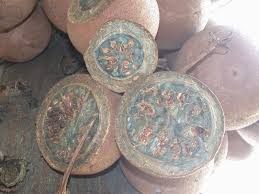

Cannon ball trees usually carry 'CAUTION' signs posted on the trunks to advise people not to stand close to and directly under the fruits as one can get hurt as they drop off by themselves. The fruit contains small seeds in a white, unpleasant smelling white jelly, which are exposed when the upper half of the fruit goes off like a cover. The long dangling fruity branches give the tree an unkempt appearance. The hard shells are used to make containers and utensils.
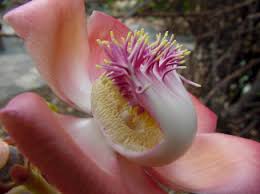 Cannon ball flowers are considered of special significance in Buddhist culture in Sri Lanka. In Andhra Pradesh [a state in India] , it is called Nagamalli/ Nagalingam/Nagalinga flower.
Cannon Ball flowers are offered to worship one of the important deity of India, Shiva. The reason is there will be a small bump at the center of the flower resembling Lord Shiva's Lingam and the pollen hood shaped like a multi hooded snake over the linga . This rare flower can be used only for offering to Lord Shiva
A large deciduous tropical tree 90' tall and indigenous to the Amazon rainforest.
The leaves, up to 6" long, are simple with serrate margin; it flowers in racemes; the yellow, reddish and pink flowers are stunning fragrant.
These are large 3" to 5" waxy aromatic smelling, pink and dark-red flowers, growing directly on the bark of the trunk (cauliflory).
Pollination is done by bees and bats.
The tree bears, also directly on the trunk and main branches, large globose woody fruits; they look like big rusty cannonballs hanging in clusters, like balls on a string.
The fruit contains small seeds in a white, unpleasant smelling edible jelly, which are exposed when the upper half of the fruit goes off like a cover.
The long dangling fruity branches give the tree an unkempt appearance.
The hard shells are used to make containers and utensils.
whose common names include Ayahuma and the Cannonball Tree, is an evergreen tree allied to the Brazil nut (Bertholletia excelsa), and is native to tropical northern South America and to the southern Caribbean. In India it has been growing for the past two or three thousand years at least, as attested by textual records, hence it is possible that it is native to India also. It's rare, but also found in Bangladesh. It is known as নাগকেশর(Nagakeshar) or নাগালিংগম(Nagalingam) in Bengali. It's part of the family Lecythidaceae and grows up to 25 m (82 ft) in height. The "Cannonball Tree" is so called because of its brown cannon-ball-like fruits. The majority of these trees outside their natural environment have been planted as a botanical curiosity, as they grow very large, distinctive flowers. Its flowers are orange, scarlet and pink in color, and form large bunches measuring up to 3m in length. They produce large spherical and woody fruits ranging from 15 to 24 cm in diameter, containing up to 200 or 300 seeds a piece. Both the fruit and the flower grow from stalks which sprout from the trunk of the tree. Cannonball Tree flowers are found on thick tangled extrusions that grow on the trunk of the tree; these are found just below the foliage branches, and right down to just above ground level. The extrusions however, can range from two to six feet in length.
The trees are grown extensively in Shiva temples in India. In Hindi it is called Shiv Kamal and also known as "Kailaspati". It is called the Nagalingam tree in Tamil. The flowers are called Shivalinga flowers in Hindi; Nagalinga Pushpa in Kannada; Nagamalli flowers or Mallikarjuna flowers in Telugu. Hindus revere it as a sacred tree because the petals of the flower resemble the hood of the Naga, a sacred snake, protecting a Shiva Lingam, the stigma. The Cannonball Tree possesses antibiotic, antifungal, antiseptic and analgesic qualities. The trees are used to cure colds and stomach aches. Juice made from the leaves is used to cure skin diseases, and shamans of South America have even used tree parts for treating malaria. The inside of the fruit can disinfect wounds. The fruit emits an unpleasant odor and can be used as an insect repelent just by rubbing it to the skin or clothes.
Cannon ball trees usually carry 'CAUTION' signs posted on the trunks to advise people not to stand close to and directly under the fruits as one can get hurt as they drop off by themselves. The fruit contains small seeds in a white, unpleasant smelling white jelly, which are exposed when the upper half of the fruit goes off like a cover. The long dangling fruity branches give the tree an unkempt appearance. The hard shells are used to make containers and utensils.
Cannon Ball flowers are offered to worship one of the important deity of India, Shiva. The reason is there will be a small bump at the center of the flower resembling Lord Shiva's Lingam and the pollen hood shaped like a multi hooded snake over the linga . This rare flower can be used only for offering to Lord Shiva
A large deciduous tropical tree 90' tall and indigenous to the Amazon rainforest.
The leaves, up to 6" long, are simple with serrate margin; it flowers in racemes; the yellow, reddish and pink flowers are stunning fragrant.
These are large 3" to 5" waxy aromatic smelling, pink and dark-red flowers, growing directly on the bark of the trunk (cauliflory).
Pollination is done by bees and bats.
The tree bears, also directly on the trunk and main branches, large globose woody fruits; they look like big rusty cannonballs hanging in clusters, like balls on a string.
The fruit contains small seeds in a white, unpleasant smelling edible jelly, which are exposed when the upper half of the fruit goes off like a cover.
The long dangling fruity branches give the tree an unkempt appearance.
The hard shells are used to make containers and utensils.
Couroupita guianensis, whose common names include Ayahuma and the Cannonball Tree, is an evergreen tree allied to theBrazil nut (Bertholletia excelsa), and is native to tropical northern South America[citation needed]; and to the southern Caribbean. InIndia it has been growing for the past two or three thousand years at least, as attested by textual records[citation needed]; hence it is possible that it is native to India also. It's rare, but also found in Bangladesh. It is known as নাগকেশর(Nagakeshar) or নাগালিংগম(Nagalingam) in Bengali.
It's part of the family Lecythidaceae and grows up to 25 m (82 ft) in height. The "Cannonball Tree" is so called because of its brown cannon-ball-like fruits. The majority of these trees outside their natural environment have been planted as a botanical curiosity, as they grow very large, distinctive flowers. Its flowers are orange, scarlet and pink in color, and form large bunches measuring up to 3m in length. They produce large spherical and woody fruits ranging from 15 to 24 cm in diameter, containing up to 200 or 300 seeds a piece.
Cannonball Tree flowers do not have nectar, so these flowers are mainly visited by bees in search of pollen; outside the native range of habitat, carpenter bees are considered to be the principal pollinators. Both the fruit and the flower grow from stalks which sprout from the trunk of the tree. Cannonball Tree flowers are found on thick tangled extrusions that grow on the trunk of the tree; these are found just below the foliage branches. The extrusions however, can range from two to six feet in length. The flowers are attached to an upwardly bent, white fleshy disk. The flowers have six petals, which are large, orange-red, and strongly perfumed. In pollination, fertile stamens can be found in a ring around reduced style and stamens. The sterile pollen is located in the anthers. As a bee enters to pollinate the flower, its back rubs against the ring with fertile pollen; this allows the bee to carry the fertile pollen to another flower. The differences in the pollen was noticed by French botanist Antoine Porteau in 1825. The differences in the pollen are as follows: the pollen of the ring stamens is fertile, while the hood pollen is sterile.
Fruits and dispersal
The tree gets its common name from the large, spherical fruits it produces. The fruit falls from the tree and cracks open when it hits the ground when mature, often causing the sound of a small explosion. The fruit emits an unpleasant aroma when exposed to the air. Individual seeds within the "ball" are coated with hair, which is thought to protect the seed when it is ingested and may also help in the passage of the seed through the intestines. The cannonball tree and its fruit are thought by some to be remnants of the last ice age, like the "hedge apple" or "osage orange" of north America. The fruit is thought to be an adaptation provided for the giant ground sloth, a long extinct species. Today instead of seeds being dispersed by the large extinct mammal, the fruit simply rots around the base of its mother tree. Like coconut palms, the trees should not be planted near paths or near traffic-filled areas, as the heavy nut is known to fall without notice.
Religious significance in Asia
The trees are grown extensively in Shiva temples in India. In Hindi it is called Shiv Kamal and also known as "Kailaspati". It is called the Nagalingam tree in Tamil. The flowers are called Shivalinga flowers in Hindi; Nagalinga Pushpa in Kannada; Nagamalli flowers or Mallikarjuna flowers in Telugu. Hindus revere it as a sacred tree because the petals of the flower resemble the hood of the Naga, a sacred snake, protecting a Shiva Lingam, the stigma.
In Sri Lanka, Thailand and other Buddhist countries the tree is often planted at Buddhist temples. It is here mistaken as the Sala tree, Shorea robusta, the tree under which the Buddha died and under which the previous Buddha Vessabhu attained enlightenment.
Medicinal uses
The Cannonball Tree possesses antibiotic, antifungal, antiseptic and analgesic qualities. The trees are used to cure colds and stomach aches. Juice made from the leaves is used to cure skin diseases, and shamans of South America have even used tree parts for treating malaria. The inside of the fruit can disinfect wounds and young leaves ease toothache[citation needed]. The fruit emits an unpleasant odor and can be used as an insect repelent just by rubbing it to the skin or clothes.
physicianpackiam
http://www.sidhhaherbs.blogspot.com
(59)


