Sunday, August 24, 2014

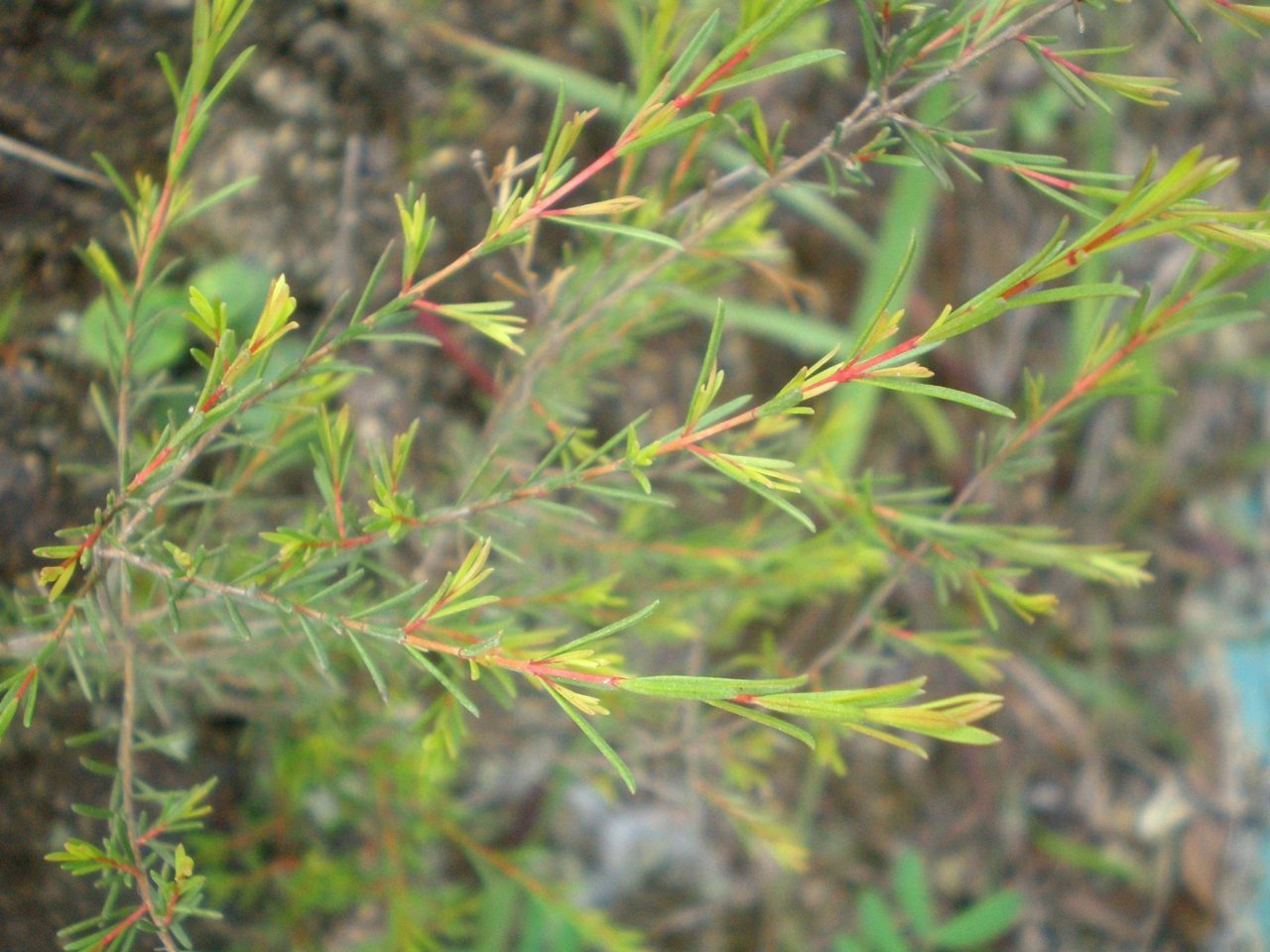
Malaysian Herbs -Baeckea frutescens- FALSE RUE- Ujung Atap (95)

google.com, pub-7876390333399498, DIRECT, f08c47fec0942fa0
                                       Baeckea frutescens      

 
FALSE RU  ujung atap
  • Baeckea is a genus of flowering plants in the myrtle family, Myrtaceae. There are about 75 species, of which 70 are endemic to Australia; the others are distributed in New Caledonia and Southeast Asia. 

    1. English: Baeckea frutescens. 

      Common names: False Ru. Cucur Atap (Malay).
       Distributed from Malaysia, China to Australia. 
      In traditional medicine, the entire plant except the roots is used to treat dysentery and as a diuretic. It is also used to treat fevers, flu, jaundice, headaches, measles, colic and abdominal pains.
      End of the roof  (Baeckea frutescens) is a medicinal plant in Indonesia. The wood used to make fences and powders for liniment abdominal pain. As materials and herbal medicine, the plant is known by the name jungrahab .
       Dried leaves as beverage for health tea/tonic; essential oils for scents and soap.
      This plant has got exactly nothing to do with plants of the Pinus genus or any other conifer, except in name.
      A shrub and sometimes small tree, it has linear leaf blades with an abundance of oil glands. When rubbed or crushed, its leaves will produce a strong, sharp, stingy, head-clearing aroma - pleasant, by all accounts.
      We can see in stalls  which sells baeckea frutescens tea bags too – and had let us sample some.
      The refreshing tea is said to be a tonic and herbal treatment for fever, headache and rheumatism, among other things. Its pleasant aroma is much like the tea tree.

      ayu ends of the roof used to make fences. It is said that the wood is dark red, extraordinarily hard and dense, heavy, and very durable.  

      The leaves are used for beverages, tea, laxative urine (diuretic), and abortivum. In traditional medicine, both in Malaysia and Indonesia, it is used to nourish the body's mother who had just given birth. Lumatan leaf edge of the roof that is mixed with water believed to cure sore. The leaves are also useful as a liniment for the whole body.  The leaves are sold in the Malay Peninsula during the Dutch colonial occupation by the name bowsprit leaf roof.  Flower edge of the roof in traditional medicine in order to treat appetite problems.  Baliem Valley, a drug used for fever, abdominal pain, and mosquito repellent and made ​​for a broom.  Crude (basic ingredients) of this plant, in Pharmacognosy known as Baeckea Folium (leaf Jungrahab) and, at least in the past, included as one of the crude drug which must be available in pharmacies. 

      End of the roof smell nice, like lavender because it contains essential oils (pinene, g-terpinena, p-sinmonena, limonena, linalol, etc.). It also contains substances (glycosides) that smells like resin. Phenol and baeckeol have been isolated from the plant end of this roof.  
      Ethanol extract of the edge of the roof showed cytotoxic activity against leukemia cells in the network. Three flavonoids were found on the leaf edge of the roof, the BF-4, BF-5, BF-6, and showed strong activity against stock leukemia cells. Baeckea frutescens is also known to be a potential anti-caries against Streptococcus mutans. Extract the edge of the roof shows anti-inhibitory activity against malaria parasites strong (Plasmodium falciparum) but not against the babesial (Babesia gibsoni).      
      thanks, wiki  
      physicianpackiam

      http://www.sidhhaherbs.blogspot.com 

              (95)

      Wednesday, July 16, 2014

      Malaysian Herbs-Custard Apple -(91)-Annona reticulata-சீத்தாப்பழம்

      google.com, pub-7876390333399498, DIRECT, f08c47fec0942fa0

      Custard Apple

      http://www.sidhhaherbs.blogspot.com 

       Custard Apple during Pregnancy !

        சீத்தாப்பழம்

      Custard apple is rich in copper which helps to form hemoglobin in the body. This is useful for pregnant women since they need about 1000 micrograms of copper every day. Hence eating custard apples during pregnancy is beneficial for both mother and child.
      Infusion of custard apple leaves is used to alleviate pain during pregnancy. But it should be consumed in moderate amount since the root and seeds have slight abortifacient properties.
      Custard apple is useful for pregnant womenPopularly known as seethaphal in India, custard apples mainly belong to the sub-tropical Annonaceae group of trees. A fruit with high nutritional benefits, custard apple is considered highly beneficial for an expecting woman. This soft and fresh fruit contains a sweet flavor and measures around 8 to 16 cm in dimension. Available in more than one color, the shape of the fruit is heart-shaped, spherical or even unusual at times. The thicker creamy flesh of the fruit has been held high since ages for the pregnant women. An expecting mother is often prescribed to have this fruit on a regular course as it is a very rich source of all kinds of nutrients.
      Seetaphal, Custard Apple Tree, Indian Medicinal PlantThe health benefits of custard apple in baby food include supply of minerals such as calcium for bone health, phosphorous for digestion, magnesium for energy production in the body, DNA and RNA synthesis, supply of vitamin C for strengthening the immune system and presence of antioxidants which neutralize free radicals.
      Custard apple is one of the sweetest fruits that you can find and hence another name for custard apple is sugar apples. The fruit is native to the tropical American countries. But the exact point of origin is unknown.  Today, you can find custard apples in most of the tropical countries of the world including tropical American countries such as Bahamas, Cuba, Dominica, Dominican Republic, Haiti, Jamaica, Puerto Rica, El Salvador, Guatemala, etc and tropical and subtropical Asian countries such as India, Indonesia, Thailand, Taiwan and Vietnam.
      We all know that would-be mothers are prescribed diets that are healthy, hygienic and safe at large. They can hardly grab a bite on much mouth-watering stuff that could be harmful for the baby inside. Seethaphal or custard apple is an ideal fruit for them for its enriched taste and nutritional value. The fruit is often recommended as part of a balanced diet for everyone. So far, as nutritious foods are better for all of us, we can eat this fresh creamy fruit for its overall benefits.
      Custard apple is stuffed with all required nutrients like vitamins, minerals, protein, carbs, fiber and essential fats. This is a single source of so many nutrients altogether which is why it is mainly recommended for an expecting woman. Seethaphal is available easily all around, and is inexpensive when compared to others.
      Vitamin A and C in custard apple is brilliant for the skin, eyes, hair and body tissues of the fetus inside the womb. It has been found that eating custard apple helps to build the brain nerves of the fetus. Regular consumption of this sub-tropical fruit is good for the growth of the baby. In addition to this, the fruit is equally beneficial for the mother as it is for the child.
      Custard apple is higher in calories, when compared to other fruits. However, they certainly make an ideal choice for the expecting mothers who require those extra calories for their existing physical condition. The high fiber amount of custard apple helps them in fighting with constipation, which is a common condition for many pregnant women. The fruit is also an excellent source of antioxidants. Therefore, it helps to remove the toxins from the body successfully.

      How is eating custard apple during pregnancy beneficial?


      Custard apple is a miracle fruit during pregnancy. It is stuffed with plenty of nutritional benefits that come to help collectively. For its manifold nutritional attributes, the fruit is considered best for the pregnant woman. Eating a custard apple daily along with other food stuffs will surely help a would-be mother in giving birth to a healthy child.  
      pysicianpackiam                                                                                                                 (91)

      http://www.sidhhaherbs.blogspot.com                 

      Malaysian Herbs-Caesalpinia pulcherrima -(92) மயிற்கொன்றை

      google.com, pub-7876390333399498, DIRECT, f08c47fec0942fa0

      http://www.sidhhaherbs.blogspot.com (மயிற்கொன்றை)

      Common names for this species include PoincianaPeacock FlowerRed Bird of ParadiseMexican Bird of ParadiseDwarf PoincianaPride of Barbados, and flamboyan-de-jardin.


      Caesalpinia pulcherrima is a species of flowering plant in the pea family, Fabaceae, that is native to the tropics and subtropics of the Americas. It could be native to the West Indies, but its exact origin is unknown due to widespread cultivation. 

      Caballero is one of the most beautiful flowering trees in the world. It has a beautiful inflorescence in yellow, red and orange and can be used to attract hummingbirds. This tree with great medicinal value can grow up to 5 meters high or more. It is also a popular and striking ornamental plant usually grown in public gardens and private yards.


      Medicinal Benefits:

      • The juice from the leaves is used to cure fever.
      • Fresh leaves of Caballero are applied externally to relieve rheumatism
      • The juice from the flower is used to cure sores.
      • Leaves can be heated and applied externally to treat stomach pains.
      • A decoction from the crushed seeds is used as an emetic and used to cure dysentery.
      • The seeds are also used to cure bad cough, breathing difficulty, and chest pain.
      • The roots are diuretic and useful in cases of stone formation in the bladder.
      • The juice of the stem and roasted fruit are used for eye diseases.
      • Four grams from the root is also said to induce abortion in the first trimester of pregnancy.
      • The finely powdered leaves are given as uterine tonic to women immediately after giving birth. 
      • physicianpackiam                    (92)
      http://www.sidhhaherbs.blogspot.com 


      Malaysian Herbs-(93)Vernonia amygdalina /Africaan Bitter Leaf

      google.com, pub-7876390333399498, DIRECT, f08c47fec0942fa0

      African Bitter Leaf


      Bitter leaf popularly called Vernonia amygdalina from the family Asteraceace is popularly known to be of immense importance when it comes to herbal therapy because of its potency to cure various diseases.
      Vernonia amygdalina has a very bitter taste which can be reduced by proper washing of the herb. The bitter taste is also of great value because it helps detoxify the body system thereby making the body healthier and free from toxic substance which are harmful to the body.
      Research have shown that regular Consumption of Veronia amygdalina could cure diverse ailment such as
      * CANCER.
      * DRUG RESISTANT. MICROBIAL INFECTIONS.
      * PROMOTE SAFE CHILD BIRTH.
      * CONSTIPATION.
      * FEVER.
      * ARTHRITIS.
      STROKE.
      * STOMACH ACHE.
      * PNEUMONIA.
      * INSOMNIA
      * LOSS OF MEMORY
      * REDUCE THE BODY WEIGHT.
      Herbal therapy is known all over the world to be very effective and cheap making use of natures gift to mankind.
      Vernonia amygdalina is available all over the world especially in the western part of Africa ( Nigeria ) where it is eaten raw or used to make various local delicacies and cure some of the diseases listed above.
      Vernonia amygdalina is available all around us though we don't know how powerful this little green plant is. 

      Abstract

      The aqueous leaf extract of Vernonia amygdalina, Del, (Compositae) given i.p. produced a dose-related fall in blood sugar. A dose of 80 mg/kg body weight of adult rabbit produced a maximum lowering of blood sugar in both fasted normal and alloxanized rabbits. The fasting blood sugar in normoglycaemic rabbits was reduced from 96 mg% to 48 mg% in 4 h. In alloxanized rabbits, the blood sugar was reduced from the mean value of 520 mg% to 300 mg% in 8 h. The hypoglycaemic effects were compared with those of tolbutamide. Acute toxicity studies of the extract in mice gave LD50 value of 1122 mg/kg body weight when given i.p. The blood sugar lowering effect of Vernonia amygdalina extract may involve a mechanism not related to insulin secretion.

      VERNONIA AMYGDALINA
      Mululuza, in Luganda, is a small shrub that is called bitter leaf in Africa due to its bitter taste. The macerated leaves of the plant are used in making soup while the water extract serves as a tonic drink for the prevention of certain illnesses.
      The leaves have found relevance in traditional medicine as anti-helmint, a laxative herb, treatment of eczemafor its anti-mutagenic activity and as an anti-malarial as the herb is also known as a quinine substitute. Vernonia amygdalina (also call Labwori in Luo language) has also been reported for its use by wild chimpanzees for the treatment of parasitic diseases in Tanzania.
      .The leaves are used in the treatment of diabetes because of its ability to lower blood sugar levels. Studies have shown that the aqueous extract also significantly reduced triglyceride levels and normalized cholesterol concentrations. This shows that the aqueous extract of V. amygdalina leaves have both hypolipidaemic and antioxidant properties. The possible hypocholesterolaemic potential and antioxidant property of V. amygdalina were investigated for its possible use for prophylaxis and treatment of atherosclerosis commonly found in diabetic diseases.
      The anticancer activity of organic extracts of V. amygdalina was first reported for human carcinoma cells of the nasopharynx 34 years ago and recent research studies have elicited antitumor activities in leukemia cells. In addition, it has been shown to inhibit the growth of breast cancer cells and shows promise for use as an agent to prevent or delay the onset of breast cancer and the herb's use as an alternative to Tamoxifen. By comparison, V. amygdalina is more than 17 times more potent than the most previously reported potent plant crude extracts on human breast cancerous cell growth and more than 170 times more potent than the least potent of the plant extracts previously reported by others. Furthermore, extracts from V. amygdalina have also been suggested to have inhibitory effects on prostate cancer cell lines with no effect on normal human blood cells.
      Reusable container
       Thanks:Nigerian Journal Of Physiological Sciences 20 (1-2): 39-42@ Physiological Society Of Nigeria, 2005
       Vernonia amygdalina is a shrub that has been commonly known as bitter leaf due the bitter taste of the leaves. It is widely used as a daily green vegetable or herb to treat malaria and diabetes. The potential of V. amygdalina was first noted when scientists observed chimpanzees use the pith of this shrub for self-deparasitization. Since that discovery, subsequent researches had unveiled more and more bioactivities possessed by different extracts of this plant such as antidiabetic, antibacterial, antimalaria, antifungal, antioxidant, liver protection and cytotoxic effects which are beneficial to health. Compounds including steroid glucosides, sesquiterpene lactones and flavonoids which contributed to its bitter taste and bioactivites have also been isolated from this plant.             (93)
      physicianpackiam

      http://www.sidhhaherbs.blogspot.com