
Calophyllum Inophyllum-----புன்னை மரம்
BINTANGOR PANTAI in MALAY
This unusual carrier oil, cold pressed from the fruit of a shrub that grows in Madagascar, in the South Pacific, in Southern Africa, and in many islands in the Southern Hemisphere is believed to have pain relieving effects, making it useful for rheumatism, arthritis, sciatica, facial neuralgia, etc. Useful for lesions due to herpes and/or shingles(especially with the addition ofRavensara Aromatica Essential Oil.)
புன்னைக்கொட்டை

Some sources recommend it for cellular regeneration, saying it is a powerful healer for burns, cuts, etc. Donna Maria recommends it in mature skincare blends. It may also help with eczema, burns, rashes, and insect bites. I have seen it recommended in skincare blends for mature skin, and seen a lot of folks talking about using it to help relieve eczema. thanks, www.naturegift.com
BINTANGOR PANTAI in MALAY
Tamanu (Calophyllum inophyllum)

“The beauty of some plants is that they occur in the folklore and ethnopharmacy of more than one country and so we are able to make comparisons between the ways in which that plant has been used medicinally and culturally.
Tamanu or Calophyllum inophyllum has proved that its virtues not only withstand the scrutiny of independent traditional use but also can be proven in modern in vivo studies to be as effective as its legend suggested.”
Tamanu or Calophyllum inophyllum has proved that its virtues not only withstand the scrutiny of independent traditional use but also can be proven in modern in vivo studies to be as effective as its legend suggested.”
A.C. Dweck International Journal of Cosmetic Science, 2002, 24, p1.
Tamanu Oil has been used traditionally in the South Pacific as a local medicine for a variety of purposes. The chemistry is complex and unusual, perhaps helping to explain some of the impressive physiological actions possessed by this plant. One of the many possible reasons for such incredible results and diversity of uses is Tamanu’s unique absorption properties. This enables the oil to reach all three layers of the skin: epidermis, dermis, and hypodermis.
Tamanu oil has been proven to have cicatrizing, antibacterial, anti-neuralgic, and anti-inflammatory properties. This combined with its unique absorption ability has resulted in Tamanu being used as a treatment for ailments ranging from scars, cuts, burns, rashes, stings, psoriasis, eczema, and sores to rheumatism, neuralgi,a and sciatica.
Containing three classes of lipids: neutral lipids, glycolipids, phospholipids, and a non-steroidal anti-inflammatory agent called calophyllolide.
The oil also contains a totally new fatty acid called halophilic acid. Calophyllic acid and a novel antibiotic lactone also present in the oil are responsible for the oil’s amazing cicatrizing power which promotes the formation of new skin tissue. This ability to rapidly regenerate new skin accelerates healing and the growth of healthy skin to such an extent that Tamanu was historically used for amputations and
leprosy.
In 1918, Tamanu Oil was so powerful in its curative properties that the French Pharmacopoeia conducted research and clinical tests resulting in the use of the oil not only topically, but orally and by injection. However, the use of the oil in Europe virtually disappeared after the late nineteen thirties as laboratories, for financial reasons, tried to use species of Tamanu trees from other countries.
The poor curative properties of this low-grade Tamanu oil gradually destroyed the strong medicinal following established, sending the product into obscurity. Another factor of particular significance was the inability to stabilize the oil. Pure Tamanu oil, much like highly therapeutic honey, has a very high crystallization-solidifying point. This can result in a crystallized-solid state, which would have been common in the cooler climates of Europe.
An important fact to note is that if the oil does not have this characteristic it has either been heat treated or blended. In order to stop this process the oil must be heated to such extreme temperatures that the biochemical and physical properties of the oil change (the enzyme and temperature-related actives - which are responsible for the very biological and therapeutic properties Tamanu is used for). Or blended to such a proportion that another oil’s properties dominate, lowering the crystallization-solidifying point. Either treatment would have a significant effect on the oil’s therapeutic benefits.
Like many herbs around the world, different varieties of the same species combined with geographic location, climatic conditions, and processes result in differing activity levels and thus curative properties.
Tamanu is no exception. Oil derived from the South Pacific has proven to be superior to other “Tamanu Oils” from around the world as can be seen by scientific analysis and treatment results. With the average Tamanu tree producing around 100kg of fruit per year, from which approximately 10kg of oil can be extracted, the need to produce the highest quality product is critical. The quality of oil from the South Pacific is also differentiated through the harvesting, drying and manufacturing process, which is just as critical as the raw material. Firstly, the time of harvest is critical to ensure the optimal activity level. This is followed by drying methods, and while “traditionally sun-dried” has a nostalgic ring to it, Tamanu is no different to 95% of all therapeutic natural products around the world where the sun breaks down and destroys key active compounds.
Therefore, Nature Corp Tamanu nuts are all dried in a temperature-controlled oven. The dried nut kernels are then cold-pressed and filtered through a centrifuge creating a one hundred percent pure Tamanu Oil.
Clinical Trial by Beausoleil, C., Lehman, L., et al. Evaluation of the Ability of One Test Product to Improve the Appearance of Scars (2001)
This study evaluated the ability of one test product to improve the appearance of scars. Subjects with visually obvious, aged scars (1 year or more) were utilized for the study. The subjects were restricted from using any moisturizing products on the scarred area for a 7-day pretest period and throughout the 8-week test period. The 0.5 ml aliquots of the product were applied to the scarred area twice a day for 8 consecutive weeks. Product applications were performed by the subjects and recorded on a product application tracking form provided to them. The subjects were evaluated prior to product application (baseline) and each week for 9 weeks at the testing facility. Visual ratings of scar appearance (color, roughness, and degree of difference from surrounding normal skin) and scar size measurements (length and width) were performed. Quantitative measurements of skin color for melanin (darkness) and hemoglobin (redness) were made on the scarred and adjacent normal skin areas using a Mexameter MX 18. Quantitative measurements of skin hydration were also performed on the same sites. Digital photographs of the scar were taken prior to the product application (baseline) and again at the end of week 8. The subjects completed a self-evaluation questionnaire regarding their scar’s appearance prior to product application (baseline) and again at the end of week 8. The subjects also completed a product questionnaire that assessed their likes and dislikes of the product.
A significant improvement in the appearance of scars after 6 weeks of Tamanu oil use was observed visually. This improvement continued through to week 8 of the study. The overall size of the scars consistently decreased throughout the study. The length of scars was reduced by an average of 0.28 cm, and the width by an average of 0.12cm. Thanks to www.911balsom.com
Tamanu oil has been proven to have cicatrizing, antibacterial, anti-neuralgic, and anti-inflammatory properties. This combined with its unique absorption ability has resulted in Tamanu being used as a treatment for ailments ranging from scars, cuts, burns, rashes, stings, psoriasis, eczema, and sores to rheumatism, neuralgi,a and sciatica.
Containing three classes of lipids: neutral lipids, glycolipids, phospholipids, and a non-steroidal anti-inflammatory agent called calophyllolide.
The oil also contains a totally new fatty acid called halophilic acid. Calophyllic acid and a novel antibiotic lactone also present in the oil are responsible for the oil’s amazing cicatrizing power which promotes the formation of new skin tissue. This ability to rapidly regenerate new skin accelerates healing and the growth of healthy skin to such an extent that Tamanu was historically used for amputations and
leprosy.
In 1918, Tamanu Oil was so powerful in its curative properties that the French Pharmacopoeia conducted research and clinical tests resulting in the use of the oil not only topically, but orally and by injection. However, the use of the oil in Europe virtually disappeared after the late nineteen thirties as laboratories, for financial reasons, tried to use species of Tamanu trees from other countries.
The poor curative properties of this low-grade Tamanu oil gradually destroyed the strong medicinal following established, sending the product into obscurity. Another factor of particular significance was the inability to stabilize the oil. Pure Tamanu oil, much like highly therapeutic honey, has a very high crystallization-solidifying point. This can result in a crystallized-solid state, which would have been common in the cooler climates of Europe.
An important fact to note is that if the oil does not have this characteristic it has either been heat treated or blended. In order to stop this process the oil must be heated to such extreme temperatures that the biochemical and physical properties of the oil change (the enzyme and temperature-related actives - which are responsible for the very biological and therapeutic properties Tamanu is used for). Or blended to such a proportion that another oil’s properties dominate, lowering the crystallization-solidifying point. Either treatment would have a significant effect on the oil’s therapeutic benefits.
Like many herbs around the world, different varieties of the same species combined with geographic location, climatic conditions, and processes result in differing activity levels and thus curative properties.
Tamanu is no exception. Oil derived from the South Pacific has proven to be superior to other “Tamanu Oils” from around the world as can be seen by scientific analysis and treatment results. With the average Tamanu tree producing around 100kg of fruit per year, from which approximately 10kg of oil can be extracted, the need to produce the highest quality product is critical. The quality of oil from the South Pacific is also differentiated through the harvesting, drying and manufacturing process, which is just as critical as the raw material. Firstly, the time of harvest is critical to ensure the optimal activity level. This is followed by drying methods, and while “traditionally sun-dried” has a nostalgic ring to it, Tamanu is no different to 95% of all therapeutic natural products around the world where the sun breaks down and destroys key active compounds.
Therefore, Nature Corp Tamanu nuts are all dried in a temperature-controlled oven. The dried nut kernels are then cold-pressed and filtered through a centrifuge creating a one hundred percent pure Tamanu Oil.
Clinical Trial by Beausoleil, C., Lehman, L., et al. Evaluation of the Ability of One Test Product to Improve the Appearance of Scars (2001)
This study evaluated the ability of one test product to improve the appearance of scars. Subjects with visually obvious, aged scars (1 year or more) were utilized for the study. The subjects were restricted from using any moisturizing products on the scarred area for a 7-day pretest period and throughout the 8-week test period. The 0.5 ml aliquots of the product were applied to the scarred area twice a day for 8 consecutive weeks. Product applications were performed by the subjects and recorded on a product application tracking form provided to them. The subjects were evaluated prior to product application (baseline) and each week for 9 weeks at the testing facility. Visual ratings of scar appearance (color, roughness, and degree of difference from surrounding normal skin) and scar size measurements (length and width) were performed. Quantitative measurements of skin color for melanin (darkness) and hemoglobin (redness) were made on the scarred and adjacent normal skin areas using a Mexameter MX 18. Quantitative measurements of skin hydration were also performed on the same sites. Digital photographs of the scar were taken prior to the product application (baseline) and again at the end of week 8. The subjects completed a self-evaluation questionnaire regarding their scar’s appearance prior to product application (baseline) and again at the end of week 8. The subjects also completed a product questionnaire that assessed their likes and dislikes of the product.
A significant improvement in the appearance of scars after 6 weeks of Tamanu oil use was observed visually. This improvement continued through to week 8 of the study. The overall size of the scars consistently decreased throughout the study. The length of scars was reduced by an average of 0.28 cm, and the width by an average of 0.12cm. Thanks to www.911balsom.com
This unusual carrier oil, cold pressed from the fruit of a shrub that grows in Madagascar, in the South Pacific, in Southern Africa, and in many islands in the Southern Hemisphere is believed to have pain relieving effects, making it useful for rheumatism, arthritis, sciatica, facial neuralgia, etc. Useful for lesions due to herpes and/or shingles(especially with the addition ofRavensara Aromatica Essential Oil.)
புன்னைக்கொட்டை
Some sources recommend it for cellular regeneration, saying it is a powerful healer for burns, cuts, etc. Donna Maria recommends it in mature skincare blends. It may also help with eczema, burns, rashes, and insect bites. I have seen it recommended in skincare blends for mature skin, and seen a lot of folks talking about using it to help relieve eczema. thanks, www.naturegift.com
KUCHING, Malaysia .(WNL)- Bintangor belongs to the family Guttifarae, which includes the mangosteen. There are over 50 species of Bintangor (C.lanigerum), found mostly in western Sarawak; of this number, two are now known to have medicinal value. To the local population, the Bintangor is known mostly as a timber tree of good quality, with attractively grained wood.
Bintangor grows in the lowland and hill forests; some even thrive on poor, sandy soil. The different types of Bintangor are identified by the structure and veneration of their leaves. The larger kinds of Bintangor can attain a girth of up to 10 feet.
At the beginning of the current project, the research team asks the Forest Department to supply 50 kg of Bintangor resin. The good news is that the healing sap can be obtained without killing the tree; the bad news, as far as Forest Officer Hj. Osman Ismawi was concerned, is that each tree yielded less thana gram of resin per tapping. Bintangor doesn’t grow densely; lots of arduous footwork went into collecting the necessary quota of latex.
Besides locating and preserving the valuable tree, Hj. Osman’s team is also collecting seedlings for systematic plantation. Some of these are planted in groves, others scattered in clearing inside virgin forests. " The Bintangor is a handsome tree!’ the veteran forester says with pride. " Calophyllum, means ‘beautiful leaf’," See how glossy, how delicately veined? It is beautiful!"
KUCHING, Malaysia (WNL)- "AIDS Cure From Sarawak Rainforest!" the headlines trumpeted when the 100-foot Bintangor tree made is debut as a potential natural remedy in the late 1980s: if the only thing were that simple!
The Bintangor story starts in 1986. Scientists from the Harvard University Arboretum and The University Of Illinois, Chicago, teamed up with the Forest Department of Sarawak, a Malaysian state on the island of Borneo.
The aim of the study was to interview traditional healers and combs the rainforest for new substances, possibly with tumour-arresting properties; the project was funded by the National Cancer Institute (NCI) in the USA.
After several years of jungle bashing, two varieties of Bintangor (Calophyllum lanigerum) were identified as "Posibble HIV-inhibiting" compounds: Calanolide A could be extracted from the leaves and twigs, and Costatolide (also known as Calanolide B) from the latex (sap) of the tree.
This was good news in more ways than one: The world urgently needs new and hopefully better drugs to combat the AIDS pandemic and the Bintangor flourishes even in the longed-over forest. Calanolide B is present in the latex which can be sustainably harvested by tapping, without destroying the tree, and Calanolide A, because it is rare, can be recreated synthetically.
In 1993, Calanolide A was approved by the NCI for pre-clinical trials. But there was still a long way to go.
"We know what Calanolide does in the test tube: it inhibits the proliferation of HIV," explains Dr. Tuah J. Jenta, a Malaysia Scientist with a degree in physical chemistry who is actively engaged in the Bintangor project. Educated in the UK, Dr Jenta lectured at the University of Sarawak (UNIMAS) for a couple of years, just at the time when the Bintangor wave crested. "The pre-clinical trials were encouraging enough to justify the commencement of clinical trials," he notes.
After the pre-clinical trial MediChem, an 11-year-old biotech firm based in Lemon Illinois, was invited to join in strategies alliance with the state Government of Sarawak based Sarawak MediChem Pharmaceuticals, Inc. was specially formed for the purpose of developing and clinically testing Calanolide A, an anti-HIV-inhibiting compound derived from the Bintangor tree.
Calanolide A inhibits HIV by attaching itself to an enzyme that the virus needs to reproduce, disabling the reproduction process. The clinical trials consisted of testing Calanolide A’s safety, according to FDA standards, in normal, healthy volunteers. The tests went well in establishing that the drug is well-tolerated and had no serious side effects, according to Thomas Flavin, a MediChem advisor and architect in the deal.
"They (the Sarawak side) benefit by learning the process and making contacts over here," Michael T. Flavin, president and founder of MediChem, told a business magazine in May 1998.
"The alliance calls for an information and technology exchange.
Sarawak scientists, whose salaries and living expenses are covered by their government, are in Lemont working to develop the potential AIDS drugs.
We benefit because these scientists are highly trained and contribute right away to the project."
The state government of Sarawak provided a required license for MediChem, which will allow the company to develop Calanolide A commercially. The Sarawak Government also helps with financing the project. Should Sarawak MediChem Pharmaceutical’s drug prove marketable, Sarawak and MediChem will split the revenues equally.
Dr. Jenta represents the Sarawak Government’s interest in MediChem. His official designation is "Treasurer," but he takes an informed interest in research and Development. Though stationed in Illinois, his work demands frequent trips to Sarawak.
In the USA, the slow process of testing Calanolide A grinds on. Phase IA studies, which have been completed, are designed to define safety limits.
Phase IB has started with the selection of volunteers for actual testing. HIV-positive persons are alerted through hospitals, even in the Internet. Volunteers are very carefully informed of the potential risks and benefits of the program designed to control the proliferation of HIV. The company is testing a synthetic form of the compound they found in the Bintangor tree on 32 HIV-positive patients.
The testing lasts six months and is being performed at six research centers across the United States. The test results will shed light on blood concentration and other physiological effects of two daily doses of the drug.
Phase II will assess the therapeutic potential of Calanolide A, and establish how the drug combines with others. Optimum does have to be determined, and side effects monitored. "HIV treatment is not a one-time dose, like popping a pill for a headache," Dr. Jenta explains, "It’s a long-term exercise. Frankly, there is insufficient clinical data to say that if you take this drug for 15 years you will be cured; no HIV drug has been around for more than 10 years. HIV mutates all the time, it becomes resistant to standard drugs. There is a need for more, better HIV drugs. The Calanolide program has a lot of potential."
According to Thomas Flavin, Phase II testing will probably begin in July 1999 and the volunteers will be monitored for six months. If all goes well, Calanolide A could be ready for commercial by September 2000. Is there such a thing as an HIV preventative? All the drugs now being used aim at preventing the development of full-blown AIDS in an HIV patient, but none can stop a person from contracting HIV.
Will Calanolide be expensive? The pricing mechanism is dictated by the pharmaceutical companies, and they are frequently criticized for greed. Glaxo, for example, has reduced the cost of its HIV drugs, so other companies may follow suit. The problem is that a new drug may consume millions before it reaches the market if it ever does. Ten substances may be tested before one is found to be successful; the end user of the one miracle cures pays for the nine duds.
Bintangor research has cost millions already, and to date, there are no guaranteed results or profit. As Calanolide passes the various tests, Sarawak MediChem exploring the idea of licensing its commercial production to a pharmaceutical giant with a huge manufacturing capacity and marketing network. "The new drug is arousing interest international gatherings like the 12th World Conference on AIDS in Geneva recently," says Dr. Jenta.
"Interested parties can approach us. If there’s potential for commercial partnership, the mechanism mechanisms for facilitating this are in place."
One main objective of the Calanolide A programme is to demonstrate the usefulness of natural products, even if they need to be synthesized for volume. Supplies of Calanolide A from natural resources are insufficient for commercial application. The fact that the drug molecule is reason enough to preserve the forest from which sprang. Both synthetic and natural substances are included in the tests.
Inspired by the Bintangor story, an Australian firm from Melbourne, AMRAD Natural/Pharmaceutical Products, has recently started to look for new medicine in Sarawak’s jungle. All field exploration has to be done under the auspices of the Sarawak Biodiversity Centre, a governmental body that supervises the commercial exploitation of the state’s natural resources.
Source:
By Heidi Munan


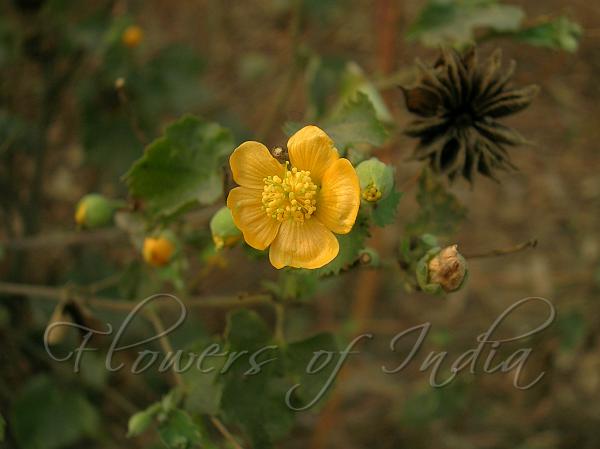
 Extract of water-soaked dried seeds is used as purgative. Leaves are used as tonic. Roots are taken as an infusion for fever.