As one of the commonly seen weeds in China, mugwort herb, also called Ai Ye or moxa, can be taken
orally or used externally in Chinese herbal therapy. Externally moxibustion therapies are its
distinguishing application; internally it has wider usage, especially for gynecological diseases.
What is mugwort herb?
It is also known as Artemisia Vulgaris in Latin, which is a perennial herb in the composite family.
Regularly it can be found along open hillsides, grassy areas, and margins of forests. The best harvesting
timing is from May to July when their leaves are in their utmost luxuriance while without blooming yet.
Drying in a ventilated shade is the way to make them with the best medicinal effect.
Mugwort leaves are shrunk and wrinkled with short stalk after drying. The intact one is in oval shape,
with pinnate parted in elliptic-lanceolate, irregular margin with coarsely sharply serrate. The upper
surface is grayish-green with sparse pubescence and glandular dots; the Lower surface is covered
with thick whitish pubescence. The preferred one should have a thick leaf, be green in color, whitish
on the lower surface, have thick pubescence, and have a rich aroma.
By the way, it can be consumed now in many forms like tea, powder, pills, extract, etc.
What is mugwort herb used for?
It is bitter, acrid, and warm in nature. Liver, Spleen, and Kidney are the three Channels it
effectively acts on.
Main clinical usage and indications are spitting blood, nosebleeds, menstrual disorders, hemifacial,
uterine bleeding, period pain, bleeding during pregnancy, restless fetus, chest and abdomen pain
due to cold, diarrhea and prolonged dysentery, abnormal vaginal discharge, eczema, sores and
ringworm etc.
Usual dosage is from 3 to 9 grams in decoction.
Popular Chinese herbal formulas
Mugwort leaf is mentioned in two formulas in Shang Han Lun and Jin Gui Yao Lue (The Treatise on
Cold Damage Disorders and Miscellaneous Illnesses) – one is Bai Ye Tang and the other is Xiong Gui Jiao Ai Tang.
Bai Ye Tang is mainly for vomiting blood due to the middle-burner Qi losing its control over blood.
This formula is especially designed for deficiency-cold in the middle-Jiao leads to Qi’s failure to control
blood, thus the blood deviation from the meridians. Ce Bai Ye (Biota Leaves) in this formula is
looking to mitigate the ascending tendency while inducing astringency; Gan Jiang (dried ginger)
works to warm the middle Burner, dispel cold, and descend the adverse movement of Qi; In addition
to warm the meridians and stop bleeding, mugwort herb works together with dried ginger to
motivate spleen yang to regulate blood; The juice of Ma Tong is warm and guides the blood
downwards to stop bleeding.
Mugwort leaf in Xiong Gui Jiao Ai Tang is aimed at warming meridians and wombs for the sake of
hemostasia. Combining with Sheng Di Huang (Rehmannia) , Chuan Xiong (Szechuan Lovage Root),
Shao Yao (Peony Root) and Gan Cao (Licorice Root), this formula tunes the meridians and blood while
treating abdominal pain. So Xiong Gui Jiao Ai Tang is good at deficiency patterns suffering from loss
of blood, especially with abdominal pain and collapse due to massive hemorrhage.
Moxibustion therapies
According to the Compendium of Materia Medica (Ben Cao Gang Mu), moxibustion with mugwort cones
cures a variety of diseases. Moxibustion practice is quite similar to acupuncture and the difference
between them is the tool used, the choice of needle or burning cone. Moxa is fragrant, inflammable
and with warming fire, which is capable of warming associated channels to dispel cold, strengthen
Yang-Qi to stop draining away, remove stasis of the blood to dissipate stagnation, and prevent
diseases from having a long life. And the weights of them are varied from 3 to 10 grams.
Glutinous rice cake
It is also a fabulous vegetable. In the Dongjiang River of Guangdong
province, its tender young leaves and buds are eaten as a vegetable
during winter and springtime. More than that, glutinous rice cake
is another famous local-flavor snack of South China during the
Ching Ming Festival. Usually, the ratio of fresh tended leaves
and glutinous rice flour mixed together is 1:2. To add some flavors,
peanut, sesame, and white sugar or others would be put in as filling too.
Fending off evil
This is a very interesting folk tradition in China. When the Dragon Boat Festival comes, people tend to
hang or place herbs like mugwort plant and calamus (Chang Pu) on the door of their houses, which
they believe can help keep their whole families from jinx the whole year. This ritual was there long
ago partly because it is a medicinal herb, which serves as a widely popular moxibustion medium to
burn its way to a cure.
Possible side effects and contraindications
Normally mugwort has little side effects if used properly. But it has its own share of cautions and
contraindications as well in TCM practice. It is only recommended for non-sensitive skin because its
volatile oils have mild stimulation on the skin, which might lead to fever and flush. Else, using it over a
long period of time could inhibit nerves and impair the liver, nervous centralization, and blood vessels due to
excessive “volatile oils”. The experiment revealed its essential oils have significant inhibiting action
on contact of the isolated heart from the toad and little impact on heart rate. However, it might develop
atrioventricular block and heart failure in a high concentration dosage.
If poisoning occurs after oral ingestion of large doses mistakenly, first gastric lavage and bone carbon
adsorption are the way to go. Then place the patient in a quiet room with lower levels of light to
avoid unnecessary stimulation.
Based on the description from Ben Cao Bei Yao Ben Cao Bei Yao (Complete Essentials of the Materia
Medica) and Ben Jing Feng Yuan (Journey to the Source of the Materia Medica Classic), mugwort
herb should be avoided by those suffering from blood heat due to Yin deficiency from the Traditional
Chinese Medicine (TCM) point of view. Hence use it only as directed or consult your doctor when
necessary.
physicianpackiam

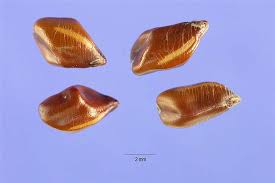 Sicklepod (Senna obtusifolia) is a leguminous plant that infests soybean fields in the southeastern United States. Its seeds contain a variety of toxic, highly colored compounds, mainly anthraquinones together with a small amount of fat. These compounds contaminate and lower the quality of soybean oil when inadequately cleaned soybean seed from this area is processed. The sorting of sicklepod seed from a soybean harvest is an additional economic burden on the farmer beyond the cost of proper disposal of the weed seed to avoid worsening field infestation. Fortunately, sicklepod seed also contains substantial amounts of carbohydrates and proteins. These edible components when freed from anthraquinones have a market in pet food as well as potential in human foods because of the high galactomannan ratio of the polysaccharides. Sicklepod seed was dehulled, and the ground endosperm was defatted, followed by sequential solvent extraction of the defatted seed meal to isolate the anthraquinones, carbohydrates, and protein components into their respective classes. Each class of isolate was spectroscopically identified. Thanks, NCBI resource