Friday, June 22, 2012

Malaysian Herbs-- ( 37) -Solanum Nigrum மணத்தக்காளி

google.com, pub-7876390333399498, DIRECT, f08c47fec0942fa0


Solanum Nigrum

The Black Nightshade is an annual plant, common and generally distributed in the South of England, less abundant in the North,http:// and somewhat infrequent in Scotland. It is one of the most cosmopolitan of wild plants, extending almost over the whole globe.
In this country, it is frequently to be seen by the wayside and is often found on rubbish heaps, but also among growing crops and in damp and shady places. It is sometimes called the Garden Nightshade because it so often occurs in cultivated ground.
---Description---It rarely grows more than a foot or so in height and is much branched, generally making a bushy-looking mass. It varies much according to the conditions of its growth, both as to the amount of its dull green foliage and the size of its individual leaves, which are egg-shaped and stalked, the outlines bluntly notched or waved. The stem is green and hollow.
The flowers are arranged in clusters at the end of stalks springing from the main stems at the intervals between the leaves, not, as in the Bittersweet, opposite the leaves. They are small and white, resembling those of Bittersweet in form, and are succeeded by small round berries, green at first, but black when ripe. The plant flowers and fruits freely, and in the autumn the masses of blackberries are very noticeable; they have, when mature, a very polished surface.
On account of its berries, the Black Nightshade was called by older herbalists 'Petty Morel,' to distinguish it from the Deadly Nightshade, often known as Great Morel. Culpepper says: 'Do not mistake the deadly nightshade for this,' cautiously adding, 'if you know it not, you may then let them both alone.'
In the fourteenth century, we hear of the plant under the name of Petty Morel being used for canker and with Horehound and wine taken for dropsy.
---Part Used---The whole plant, gathered in early autumn, when in both flower and fruit and dried. Also the fresh leaves.
When the plant grows at all in a bunchy mass, strip off the stems singly and dry them under the same conditions as given above for Belladonna leaves, tying several stems together in a bunch, however, spread out fanwise for the air to penetrate to all parts, and hang the bunches over strings, rather than in trays. The bunches should be of uniform size.
[Top]
---Medicinal Action and Uses---This species has the reputation of being very poisonous, a fact, however, disputed by recent inquiries. In experimenting on dogs, very varying results have been obtained, which may be explained by the fact that the active principle, Solanine, on which the poisonous properties of this and the preceding species depend, and which exists in considerable quantity in the fresh herb, varies very much at different seasons.
The berries are injurious to children but are often eaten by adults with impunity, especially when quite ripe, as the poisonous principle is chiefly associated with all green parts. Cattle will not eat the plant and sheep rarely touch it.
It is applied in medicine similarly to Bittersweet, but is more powerful and possesses greater narcotic properties.
According to Withering and other authorities, 1 or 2 grains of the dried leaves, infused in boiling water, act as a strong sudorific.
In Bohemia, the leaves are placed in the cradles of infants to promote sleep. In the islands of Bourbon and Mauritius, the leaves are eaten in place of spinach: and the fruit is said to be eaten without inconvenience by soldiers stationed in British Kaffraria. (Lindley's Treasury of Botany.)
It has been found useful in cutaneous disorders, but its action is variable, and it is considered a somewhat dangerous remedy except in very small doses.
The bruised fresh leaves, used externally, are said to ease pain and abate inflammation, and the Arabs apply them to burns and ulcers. Their juice has been used for ringworm, gout, and earache, and mixed with vinegar, is said to be good as a gargle and mouthwash.
Besides the above-mentioned species, others are used for medicinal, alimentary, and other purposes. Some are employed almost universally as narcotics to allay pain, etc.; others are sudorific and purgative. Solanum toxicarium is used as a poison by the natives of Cayenne. S. pseudo-quina is esteemed as a valuable febrifuge in Brazil. Among those used for food, are S. Album and S. Æthiopicum, the fruits of which are used in China and Japan. Those of. Anguivi are eaten in Madagascar. S. esculentum and its varieties furnish the fruits known as Aubergines or Brinjals, which are highly esteemed in France, and may sometimes be met with in English markets; they are of the size and form of a goose's egg and usually of a rich purple color. The eggplant, which has white berries, is only a variety of this. The Peruvians eat the fruits of S. muricatum and S. quitoense; those of S. ramosum are eaten as a vegetable in the West Indies. The Tasmanian Kangaroo Apple is the fruit of S. laciniatum; unless fully ripe this is said to be acrid. In Gippsland, Australia, the natives eat the fruits of S. vescum, which, like the preceding, is not agreeable till fully ripe, when it is said to resemble in form and flavour the fruits of Physalis peruviana. Of other species the leaves are eaten; as those of S. oleraceum in the West Indies and Fiji Islands, of S. sessiflorum in Brazil, etc.
Other species are used as dyes. S. indigoferum, in Brazil, is cultivated for indigo. The juice of the fruit of S. gnaphalioides is said to be used to tint the cheeks of the Peruvian ladies, while their sisters of the Canary Isles employ similarly the fruits of S. vespertilia. The fruits of S. saponaceum are used in Peru to whiten linen in place of soap. S. marginatum is used in Abyssinia for tanning
 leather.Thanks botanical.com
physicianpackiam

Sunday, June 17, 2012

Malaysian Herbs ---pirandai 34 பிரண்டை

google.com, pub-7876390333399498, DIRECT, f08c47fec0942fa0


grape family. It is commonly known as Veldt Grape or Devil's Backbone
.


Dear friends we can see this plant growing abundantly in empty houses ans chinese and indian herbal found houses. This is a best medicine for cut wounds like saw or knife. With a bit of limestone or (chunnambu) and 4 or 5  stalks of pirandai you may grind and apply.It will heal with in 3 days. no doubt. I said only for new wounds.

It is probably native to India or Sri Lanka, but is also found in AfricaArabia, and Southeast Asia. It has been imported to Brazil and the southern United States. It is very commonly known as asthisamharaka. As per Dr Jyotiraditya Agarwal (Chief Ayurvedic Consultant of Nidanam Clinic), Cissus has been used in various ayurvedic classical medicines to heal broken bones and injured ligaments and tendons.
Cissus quadrangularis reaches a height of 1.5 m and has quadrangular-sectioned branches with internodes 8 to 10 cm long and 1.2 to 1.5 cm wide. Along each angle is a leathery edge. Toothed trilobe leaves 2 to 5 cm wide appear at the nodes. Each has a tendril emerging from the opposite side of the node. Racemes of small white, yellowish, or greenish flowers; globular berries are red when ripe.Cissus quadrangularis' has been used as a medicinal plant since antiquity.
 In siddha medicine it is considered a tonic and analgesic, and is believed to help heal broken bones, thus its name asthisamharaka (that which prevents the destruction of bones).
 It is said to have antibacterial, antifungal, antioxidant, anthelmintic, antihemorrhoidal and analgesic activities. It contains a rich source of carotenoids, triterpenoids and ascorbic acid. In a study in Cameroon, high doses of the extracts have been shown to have beneficial effects against obesity and associated oxidative stress. Its bactericidal effects on Helicobacter pylori hold promise as a potential treatment of gastric ulcers in conjunction with NSAIDtherapy. A weight loss supplement containing Cissus quadrangularis and other ingredients including green tea, soy, selenium, chromium, and B vitamins was evaluated in an 8-week trial. The supplement helped reduce body weight by 4-8% ( placebo 2.4%) a clinically significant weight loss.

[edit]Experimental studies on CQ

A study was undertaken to evaluate the effect of methanolic extract of Cissus quadrangularis Linn (CQ) on the healing process of experimentally fractured radius-ulna of dog. CQ treated animals revealed faster initiation of healing process than the control animals on radiological and histopathological examinations. The treated group also revealed a decrease in serum calcium level to a greater extent than the control group. Healing was almost complete on 21 st day of fracture in the treated animals and remained incomplete in the control animals. No significant alteration of serum calcium level was observed on 21 st day of fracture in both the groups.Thanks wikipedia
physicianpackiam
http://www.sidhhaherbs.blogspot.com

Wednesday, June 13, 2012

Malaysian Herbs-(24)நெல்லிக்கனி

google.com, pub-7876390333399498, DIRECT, f08c47fec0942fa0
Phyllanthus Emblica     நெல்லிக்கனி
http://www.sidhhaherbs.blogspot.com

Amla Tree - Nellikai, Phyllanthus Embilca (Emblica offcinalis ...


Dear friends I sincerely  would like to appeal to the Malaysian Government to  consider  to plant as much Phylanthus Emblica on road sides to save the citizens  from illness and to give shade and also to stop the erosion of the land, during heavy rain.


The Indian gooseberry (Phyllanthus emblica, syn. Emblica officinalis) is a deciduous tree of the Euphorbiaceae family. It is known for its edible fruit of the same name.

Common names of this tree include amalaka in Sanskrit, amla (आँवला) in Hindi, Nellikai in Tamil , amlaki in Bengali, and amala in Nepal Bhasa
.
The herb Phyllanthus emblica has gained interest as a potential treatment for human bone disorders as well as diabetes patients.


The herb Phyllanthus emblica has gained interest as a potiential treatment for human bone disorders as well as diabetes patients.
The plant starts yielding after 4-5 years of planting. A mature plant gives (10 years old) around 60-70 kg of fruit per year. Per kg contains 15-20 fruits. A well-maintained tree gives yield up to around 70 years. The average fruit yield is 200kg per year in a well grafted fully mature tree. It costs around Rs 6 per kg. For major medicinal crops banks including NABARD arrange loans for the cost of cultivation to farmers. So all farmers will use this opportunity and get better returns. Because the present production level in India is too low compared to the population. Now we are producing only 2 lakhs tonnes/year only. By creating awareness among people about the health benefits of Amla, We can attain great demand. That time we need daily 2 lakhs tonnes of fruits.


Plant Anatomy

The tree is small to medium-sized, reaching 8 to 18 m in height, with a crooked trunk and spreading branches. The branchlets are glabrous or finely pubescent, 10-20 cm long, usually deciduous; the leaves are simple, subsessile, and closely set along branchlets, light green, resembling pinnate leaves. The flowers are greenish-yellow. The fruit is nearly spherical, light greenish yellow, quite smooth, and hard on appearance, with 6 vertical stripes or furrows. Ripening in autumn, the berries are harvested by hand after climbing to the upper branches bearing the fruits. The taste of Indian gooseberry is sour, bitter and astringent, and is quite fibrous. In India, it is common to eat gooseberries, steeped in salt water and turmeric, to make the sour fruits palatable.

Medical Research

Indian gooseberry has undergone preliminary research, demonstrating in vitro antiviral and antimicrobial properties. Experimental preparations of leaves, bark, or fruit have shown potential efficacy against laboratory models of disease, such as inflammation, cancer, age-related renal disease, and diabetes.

A human pilot study demonstrated a reduction of blood cholesterol levels in both normal and hypercholesterolemic men.

Although fruits are reputed to contain high amounts of ascorbic acid (vitamin C), 445 mg/100g, the specific contents are disputed and the overall antioxidant strength of amla may derive instead from its high density of tannins and other polyphenols. The fruit also contains flavonoids, kaempferol, ellagic acid, and gallic acid.

Traditional Uses

In folk medicine, dried and fresh fruits of the plant are used. All parts of the plant are used in various Ayurvedic herbal preparations, including fruit, seed, leaves, roots, bark, and flowers. According to Ayurveda, amla fruit is sour (amla) and astringent (kashaya) in taste (rasa), with sweet (madhura), bitter (tikta) and pungent (katu) secondary tastes (anurasas).Its qualities (gunas) are light (laghu) and dry (ruksha), the post-digestive effect (vipaka) is sweet (madhura), and its energy (virya) is cooling (shita).

According to Ayurveda, amla is specific to pitta due to its sweet taste and cooling energy.However, amla is thought to balance vata by virtue of its sour taste, and kapha due to its astringent taste and drying action. It may be used as a rasayana (rejuvenative]] to promote longevity, and traditionally to enhance digestion (dipanapachana), treat constipation (granuloma), reduce fever (caragana), purify the blood (raktaprasadana), reduce cough (kasahara), alleviate asthma (svasahara), strengthen the heart (hrdaya), benefit the eyes (chakshushya), stimulate hair growth (romasanjana), enliven the body (zivania), and enhance intellect (medhya).

In Ayurvedic polyherbal formulations, Indian gooseberry is a common constituent, and most notably is the primary ingredient in an ancient herbal rasayana called Chyawanprash. This formula, which contains 43 herbal ingredients as well as clarified butter, sesame oil, sugar cane juice, and honey, was first mentioned in the Charaka Samhita as a premier rasayana or rejuvenating compound.

Popularly used in inks, shampoos, and hair oils, the high tannin content of Indian gooseberry fruit serves as a mordant for fixing dyes in fabrics. Amla shampoos and hair oil are traditionally believed to nourish the hair and scalp and prevent premature grey hair.[citation needed]

In Hinduism, amla is regarded as a sacred tree worshipped as Mother Earth.

thanks to www.vasista india.com


Amla strengthens the body, expels toxins from the body


 and improves the defense mechanism of the body.


It is an essential vitamin to improve eyesight

Weakness of body, heart, and mind shall be dispelled by taking fresh amla juice in between meals.


Massaging the head with amla oil induces sound sleep and


 is good for hair. prevents premature graying of hair.


Amla is a powerful food for the brain.


Studies show that Amla helps lower cholesterol


Amla also helps maintain the functioning of the liver


Increases Hemoglobin and red blood cell count


Useful for Cough, Bronchitis, Asthma

As a rejuvenative herb, Amla nourishes all the body

tissues and accelerates the cell regeneration process. It

also cleanses  plasma and
blood.


For both men and women, Amla helps maintain

reproductive area health. Amla is excellent for


 strengthening the roots of your hair and maintaining its 


color and luster.

Dear friends You can buy this rare herb from Brickfields in Malaysia and please make use of it. 
physicianpackiam
http://www.sidhhaherbs.blogspot.com


Friday, June 8, 2012

Malaysian Herbs(36) Abutilon Indica துத்தி

google.com, pub-7876390333399498, DIRECT, f08c47fec0942fa0


http://www.sidhhaherbs.blogspot.com
Indian Mallow
Abutilon indicum (Indian

 AbutilonIndian Mallow


துத்திச் செடி

 is a small shrub in the Malvaceae family, native to tropic and subtropical regions and sometimes cultivated as an ornamental. This plant is often used as a medicinal plant and is considered invasive on certain tropical islands.


 In traditional medicine, A. indicum is used as a demulcent, aphrodisiac, laxative, diuretic, pulmonary and sedative (leaves). The bark is astringent and diuretic; laxative, expectorant and demulcent (seeds); laxative and tonic, anti-inflammatory and anthelmintic (plant); analgesic (fixed oil); diuretic and for leprosy (roots) The whole plant is uprooted, dried and is powdered. In ancient days, maidens were made to consume a spoonful of this powder with a spoonful of honey, once in a day, for 6 months until the day of marriage, for safe and quick pregnancy. The leaves can also be used to treat ulcers, headaches, gonorrhea & bladder infection.
The plant is very much used in Siddha medicines. In fact, the root, bark, flowers, leaves, and seeds are all used for medicinal purposes by Tamils. The leaves are used asan  adjunct to medicines used for pile complaints. The flowers are used to increase semen in men.
A methanol extract of A. indicum had some antimicrobial properties. A chemical compound, β-sitosterol, which has been identified as the active ingredient in many medicinal plants, is present in A. indicum and a petroleum ether extract provided larvicidal properties against the mosquito larvae Culex quinquefasciatus

[edit]

Abutilon indicum (Indian AbutilonIndian Mallow; is a small shrub in the Malvaceae family, native to tropic and subtropical regions and sometimes cultivated as an ornamental. This plant is often used as a medicinal plant and is considered invasive on certain tropical islands.


Botanical name: Abutilon indicum    Family: Malvaceae (Mallow family)
Common name: Indian Mallow, Country Mallow, Abutilon, Indian abutilon • Hindi: कंघी Kanghi • Marathi: पेटारी Petari • Tamil: Paniyaratutti • Malayalam: വെല്ലുരമ് Velluram •Telugu: Tuturabenda • Kannada: Tutti • Bengali: পোটারী Potari
Synonyms: Sida Indica
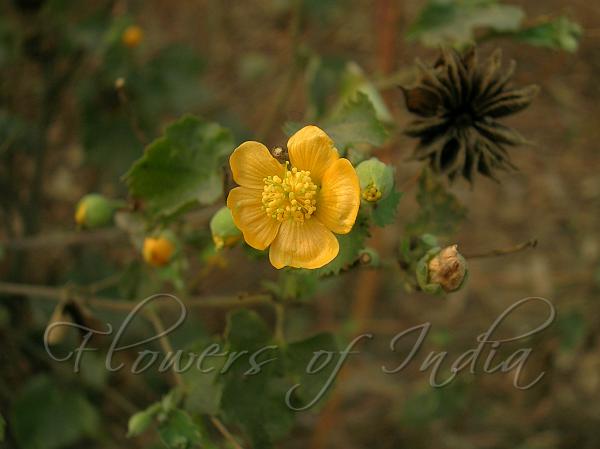
Indian Mallow is an erect velvety-pubescent shrub with circular-ovate or heart-shaped leaves with coarsely crenate-serrate margins. The plant can reach up to 1-2 m. The leaves are alternately arranged have long stalks, and have velvety, soft, pale hairs on them. Orange-yellow flowers, 2-3 cm across, occur solitary in axils, on long stalks, 4-7 cm. Orange-yellow petals are triangular-obovate, 1 cm long or slightly more, staminal-tube hairy with stellate hairs. Fruit is quite interesting - it is circular in shape, consisting of 11-20 radiating hairy carpels, brown when dry; each carpel flattened, somewhat boat-shaped. Seeds are kidney-shaped. The plant is a weed commonly found on disturbed land. Flowering: September-April
Medicinal uses: Extract of water-soaked dried seeds is used as purgative. Leaves are used as tonic. Roots are taken as an infusion for fever.


Thanks to Flower of India
pysicianpackiam


Malaysian Herbs-- (35)spinacia oleoracea முளைக்கீரை

google.com, pub-7876390333399498, DIRECT, f08c47fec0942fa0


http://www.sidhhaherbs.blogspot.com
spinacia oleoracea     முளைக்கீரை

SPINACH

Spinach is not known in a wild state. It probably originated in northern Iran, Afghanistan and Turkmenistan where related wild species such as Spinacia tetrandraSteven ex M.Bieb. and Spinacea turkestanica Iljin can be found. It spread to China in the 7th century and to Europe in the 12th century. Spinach is now cultivated worldwide, mostly in temperate regions, but also in the cooler parts of the tropics. In tropical Africa it is grown to a limited extent in the highland areas of East and southern Africa.


One of the most important potherbs cultivated, spinach is rich in vitamins and minerals. It is an especially good source of vitamins A and C.

Planting and culture of Spinach


Any good, well-drained garden soil will suit spinach provided it is not acid. The preferred pH is between 6 and 7. Soils that are more acidic should be limed at whatever rate is indicated by a soil test.
Spinach requires an abundance of plant food, especially nitrogen. For proper soil preparation, the earth should be well spaded to a depth of six inches with well-rotted manure or compost incorporated. Lime only after the manure has been added.

Beneficial companion plant

A plant that is beneficial to spinach for both growth and insect control is strawberries. For information on other vegetable companion plants see the companion planting chart.

Spinach is an important green leafy vegetable in temperate climates. The entire above-ground part of young plants or the tops of older plants are generally consumed after light cooking. Raw spinach is sometimes eaten in salads. In Africa it is entirely a fresh market product; in Western Europe and North America more than half of the produce is processed into canned or deep-frozen products
.
Spinach is one of the richest sources of beta-carotene. Beta carotene is transformed into vitamin A in the intestine. 

About Spinach: 

Beta carotene helps in reducing oxidative stress of the free radical. Thiamine is present in spinach that is absorbed by the body. Thiamine helps in the transformation of carbohydrates into energy. 

Folic acid is found in abundance in spinach. Folic acid helps in the prevention of anemia. Folic acid should be consumed by pregnant women for the proper development of the babies in the fetus. Folic acid also helps in the combination of proteins.

 Spinach and Vitamins:
Vitamin C is also present in spinach Vitamin C has the properties of antioxidants. Vitamin C helps in the development of immunity. Vitamin C also helps in the accumulation of iron in the body. Vitamin C also helps in the development of the gums and teeth. 

Vitamin E is found the spinach. Vitamin E has the properties of the antioxidants that help in the development of the reproductive system. Vitamin E also helps in the improving the condition of the skin and hair. Vitamin K is also found in spinach. Vitamin K helps in the clotting of blood. Vitamin K also prevents the deposition of calcium in the walls of the arteries. The prevention of deposition of calcium on the walls of the arteries do not restrict the flow of blood through the heart. The end result is the prevention of cardiac diseases. 

Vitamin C and beta carotene prevent the risks of colon cancer. The presence of vitamin E in spinach prevents the deterioration of the brain cells. Spinach is one of the richest sources of iron. Iron is an important component of hemoglobin that help in the transportation of oxygen from the lungs to various tissues of the body. Thanks to seetha geetha.com

Wash and dry leaves order to preserve the largest possible amount of the vitamins and minerals in spinach, the leaves should be washed as quickly as possible, without soaking, and dried by whirling in a salad basket. Water left on the leaves dissolves vitamin C, sugars and minerals, and spoils the flavor of the cooked product.

Cooking Spinach

To cook, heat as quickly as possible in a small amount of water, then reduce the heat and cover, allowing it to steam. The spinach is ready to serve after about five minutes or as soon as the leaves have wilted.

Varieties of Spinach

There are two types: one with crumpled leaves, of which Long Standing Bloomsdale and Virginia Savoy are the most popular; the other with thicker, smoother leaves, as typified by King of Denmark and Nobel. Neither of these go to seed as readily as the others.
Varieties recommended for freezing are: Giant Nobel, Viking, Long Standing Blooms-dale, Northland, and Hybrid No. 7.
Disease-resistant varieties include Winter Bloomsdale, Hybrid No. 7, and Melody Hybrid.

New Zealand spinach

New Zealand spinach (Tetragonia tetragonioides) is not true spinach and does not resemble spinach in growth pattern, but when cooked and served there is little difference between them. It has the great merit of flourishing in the summer heat, and as its leaves are picked, others grow to replace them. Because of the outer shells, the seed should be soaked in water or scored before planting.

Malabar spinach                                                     (35)

Malabar spinach (Basella alba) is another excellent substitute for spinach, either cooked or raw. It can be grown on a fence and will thrive in warm weather. It is susceptible to frost injury.
physicianpackiam


http://www.sidhhaherbs.blogspot.com


Malaysian Herbs -(26)santalinu செஞ்சந்தனம்

google.com, pub-7876390333399498, DIRECT, f08c47fec0942fa0
சிவப்புச்சந்தனம் (ciwappuccantanam)

Pterocarpus santalinu


Pterocarpus santalinus, is a Southeast Asian tree of the pea family (Fabaceae). This species may have been the source of the sandalwood used in King Solomon’s temple.


Many other woods are used as substitutes for true sandalwood. Red sandalwood is obtained from the reddish-coloured wood of Pterocarpus santalinus, a Southeast Asian tree of the pea family (Fabaceae). This species may have been the source of the sandalwood used in King Solomon’s temple.

Pterocarpus santalinus (Teluguరక్తచందనము (raktachandana), (Tamilசிவப்புச்சந்தனம் (ciwappuccantanam); Red Sanders orRed Sandalwood) is a species of Pterocarpus native to India. It is only found in south India in KadapaChittoor, and most of the hilly regions of Nepal. In Nepal, sandalwood is one main and lucrative markets for smugglers as a high price is paid for this wood in China. Since the exporting of sandalwood was legalized in Nepal, the underground market is growing and there are many arrests every year of those trying to smuggle this wood to China. It is a light-demanding small tree growing to 8 m tall with a trunk 50–150 cm diameter. It is fast-growing when young, reaching 5 m tall in three years even on degraded soils. It is not frost tolerant, being killed by temperatures of −1 °C. The leaves are alternate, 3–9 cm long, trifoliate with three leaflets. The flowers are produced in short racemes. The fruit is a pod 6–9 cm long containing one or two seeds.
Useful part
Heartwood, fruits, stem bark
Medicinal Uses
Headache, burning sensation, vomiting, diarrhea, dysentery, boils, scorpion sting, skin diseases, leprosy, ulcers, bleedings, inflammations, fever, eye diseases, general debility, mental aberrations,  semen coagulation

Major chemical constituents
lupenone, epilupeol, lupeol, Endemol, pterocarpolone, pterocarpol, cryptomeridiol
In Siddha medicine, red sandals and white sandals are the most needed herbs in Leyhiams to cool the three thoshas and the body. It is cut into small pieces as shown and then powdered to prepare medicines. 
physicianpackiam


Malaysian Herbs(25)சிறியாநங்கை

google.com, pub-7876390333399498, DIRECT, f08c47fec0942fa0


சிறியா நங்கை என் பொதுவாக எண்ணப்படும் அல்லது அறியப்படும் நிலவேம்பு


Andrographis paniculata
 This is an erect annual herb extremely bitter in taste in all parts of the plant body. The plant is known in north-eastern India as Maha
-Tita, literally "king of bitters", and known by various vernacular names (see the table below).
 As an Siddha herb it is called SIRIA NANGAI and for Ayurveda herb it is known as Kalmegh or Kalamegha, meaning "dark cloud". It is also known as Bhui-neem, meaning "neem of the ground", since the plant, though being a small annual herb, has a similar strong bitter taste as that of the large Neem tree (Azadirachta indica). 
In Malaysia, it is known as Hempedu Bumi, which literally means 'bile of earth' since it is one of the most bitter plants that are used in traditional medicine. The genus Andrographis consists of 28 species of small annual shrubs essentially distributed in tropical Asia.

 Only a few species are 

 medicinal, of which A
.
 paniculate is the most 

popular.

Description

Andrographis paniculata grows erect to a height of 30–110 cm in moist, shady places. The slender stem is dark green, square in cross-section with longitudinal furrows and wings along the angles. The lance-shaped leaves have hairless blades measuring up to 8 centimeters long by 2.5 wide. The small flowers are borne in spreading racemes. The fruit is a capsule around 2 centimeters long and a few millimeters wide. It contains many yellow-brown seeds. Distribution
A. paniculata is distributed in tropical Asian countries, often in isolated patches. It can be found in a variety of habitats, such as plains, hillsides, coastlines, and disturbed and cultivated areas such as roadsides, farms, and wastelands. Native populations of A. paniculata are spread throughout south India and Sri Lanka which perhaps represent the center of origin and diversity of the species. The herb is an introduced species in northern parts of India, Java, Malaysia, Indonesia, the West Indies, and elsewhere in the Americas. The species also occurs in Hong Kong, Thailand, Brunei, Singapore, and other parts of Asia where it may or may not be native. The plant is cultivated in many areas, as well.
Unlike other species of the genus, A. paniculata is of common occurrence in most places in India, including the plains and hilly areas up to 500 m, which accounts for its wide use. Since time immemorial, village and ethnic communities in India have been using this herb for treating a variety of ailments.
Cultivation
It does best in a sunny location. The seeds are sown during May and June. The seedlings are transplanted at a distance of 60 cm x 30 cm.
Medicinal use
Since ancient times, A. peniculata has been used in traditional Siddha and Ayurvedic systems of medicine as well as in tribal medicine in India and some other countries for multiple clinical applications. From a biomedicinal perspective, the therapeutic value of Kalmegh is due to its mechanism of action which is perhaps by enzyme induction. The plant extract exhibits antityphoid and antifungal activities. Kalmegh is also reported to possess antihepatotoxic, antibiotic, antimalarial, antihepatitic, anti-thrombogenic, anti-inflammatory anti-snake venom, and antipyretic properties to mention a few, besides its general use as an immunostimulant agent.

 A study conducted at Bastyr University, showed a significant rise in the mean CD4 lymphocyte level of HIV subjects after administration of 10 mg/kg andrographolide, the chief constituent extracted from the leaves of the plant.

The herb has shown an ability to reduce inflammation (heat) and fight viral infection and is used as a principal ingredient in traditional Chinese medicinal formulas for lung support from colds. Andrographolide is a bitter water-soluble lactone exhibiting protective effects in carbon tetrachloride-induced hepatotoxicity in rats. Its LD in male mice was 11.46 gm/kg, . This bitter principle was isolated in pure form by Gorter (1911). Such other activities as liver protection under various experimental conditions of treatment with galactosamine, paracetamol, etc. are also attributed to andrographolide. The hepatoprotective action of andrographolide is related to the activity of certainmetabolic enzymes.                                                                               [
Andrographis paniculata plant extract is known to possess a variety of pharmacological activities. 

Andrographolide, the major constituent of the extract, is implicated in its pharmacological activity. A study has been conducted on the cellular processes and targets modulated by andrographolide treatment in human cancer and immune cells. Andrographolide treatment inhibited the in vitro proliferation of different tumor cell lines, representing various types of cancers. 

The compound exerts direct anticancer activity on cancer cells by cell cycle arrest at G0/G1 phase through induction of cell cycle inhibitory protein p27 and decreased expression of cyclin-dependent kinase 4 (CDK4)Immunostimulatory activity of andrographolide is evidenced by increased proliferation of lymphocytes and production of interleukin 2. Andrographolide also enhanced the tumor necrosis factor α production and CD marker expression, resulting in increased cytotoxic activity of lymphocytes against cancer cells, which may contribute for its indirect anticancer activity. The in vivo anticancer activity of the compound is further substantiated against B16F0 melanoma syngenic and HT 29 xenograft models. These results suggest that andrographolide is an interesting pharmacophore with anticancer and immunomodulatory activities and hence has the potential to be developed as a cancer therapeutic agent
In one Chilean study, the herb had a significant drying effect on the nasal secretions of cold sufferers who took 1,200 milligrams of Andrographis extract daily for five days. A systematic review of the literature and meta-analysis of randomized controlled trials also suggested the herb alone or in combination with eleuthero may be an appropriate alternative treatment for uncomplicated acute upper respiratory tract infection.
The herb is the well-known drug Kalmegh 'green chiretta', and forms the principal ingredient of a household medicine ('alui'), used as a bitter tonic and febrifuge
The Tamils have been using Nilavempu - as it is called in Tamil - for centuries. In Siddha medicine, Andrographis paniculata is used widely to treat fevers like chikungunya, swine flu, typhoid, etc.
A recent(2011) randomized, double-blind, multicentre, study found Andrographis paniculata as effective as mesalazine (mesalamine) in ulcerative colitis. Further, andrographolide inhibits interleukin-6 expression and suppresses prostate cancer cell growth in vitro.
Andrographis has been shown to be a safe traditional botanical for supporting upper respiratory tract health, per the analysis of seven double-blind controlled trials. The herb has been shown to inhibit RANTES secretion in inflamed bronchial cells. 
 RANTES is a chemoattractant for eosinophils, monocytes, and lymphocytes that are stored in, and released by, platelets and activated T-cells. In related research: Andrographolide, an active ingredient in Andrographis, has been shown to be responsible for the herb's inflammatory modulating actions, including the reduction of cytokine and peritoneal deposition of neutrophils, and modulation of lung inflammation in vivo. Extracts of Andrographis exhibit potent inflammatory modulating and antioxidant actions in mouse models
Andrographis paniculata extracts are mosquito repellent and can also be adulticidal to mosquitoes, viz., Culex quinquefasciatus and Aedes aegypti.

Phytochemistry

Andrographolide is the major constituent extracted from the leaves of the plant which is a bicyclic diterpenoid lactone. This bitter principle was isolated in pure form by Gorter (1911). Such other activities as liver protection under various experimental conditions of treatment with galactosamine (Saraswat et al., 1995), paracetamol (Visen et al., 1993), etc. are also attributed to Andrographolide. 
The hepatoprotective action of andrographolide is related to the activity of certain metabolic enzymes (Choudhury and Poddar, 1984, 1985; Choudhury et al., 1987). Systematic studies on the chemistry of A. paniculata have been carried out.
 physicianpackiam